40 styles
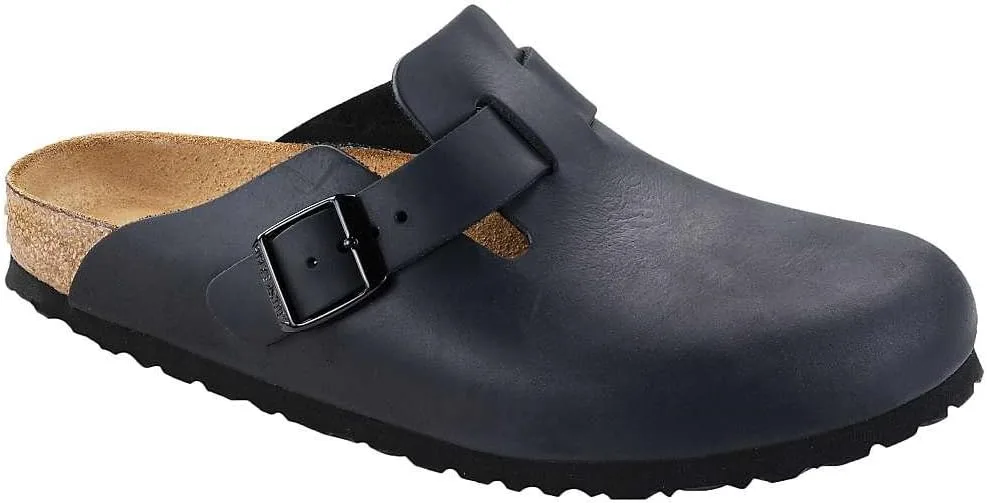
Birkenstock Boston Clogs
The Boston is a closed-toe clog on a cork footbed with one buckle. It has barely changed since the 1970s, and it is now the most copied shoe of its kind. Here is what the materials actually mean, how to size it, and which version to buy.
Products
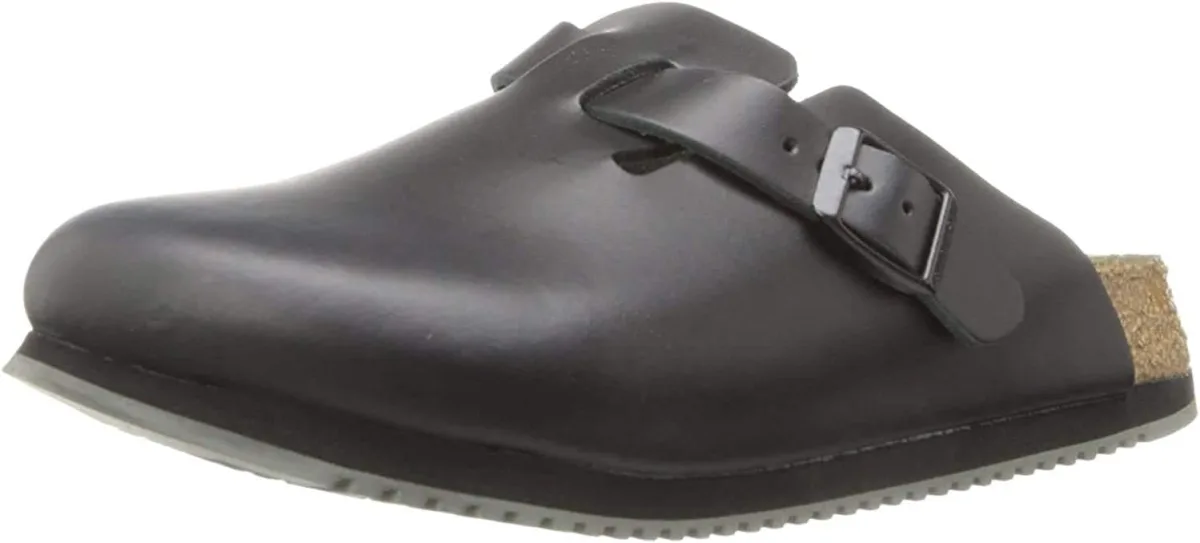
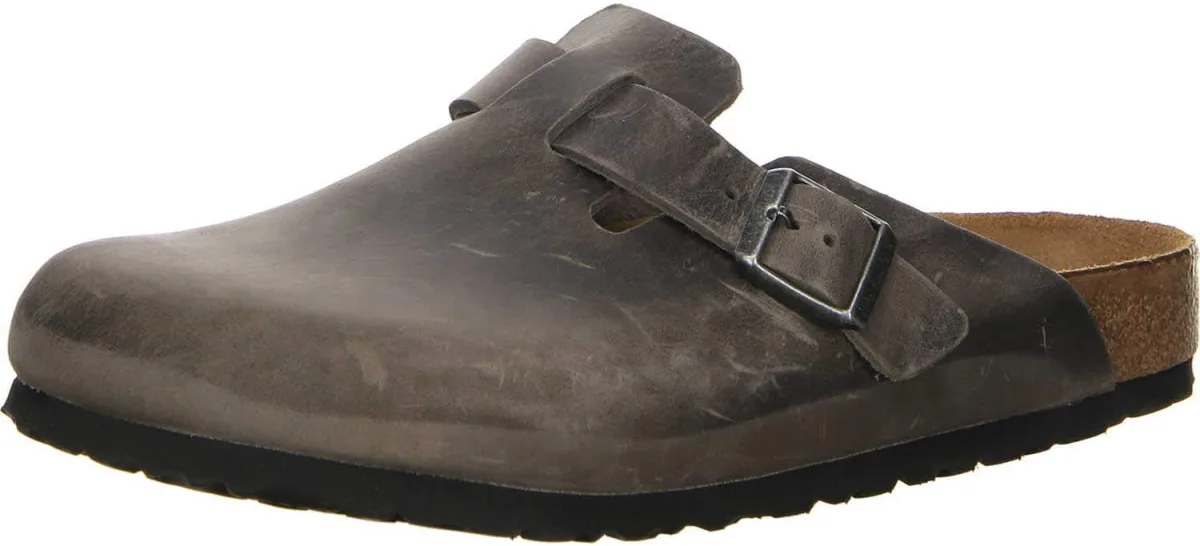
Birkenstock
Birkenstock Women's Boston Bs Clogs
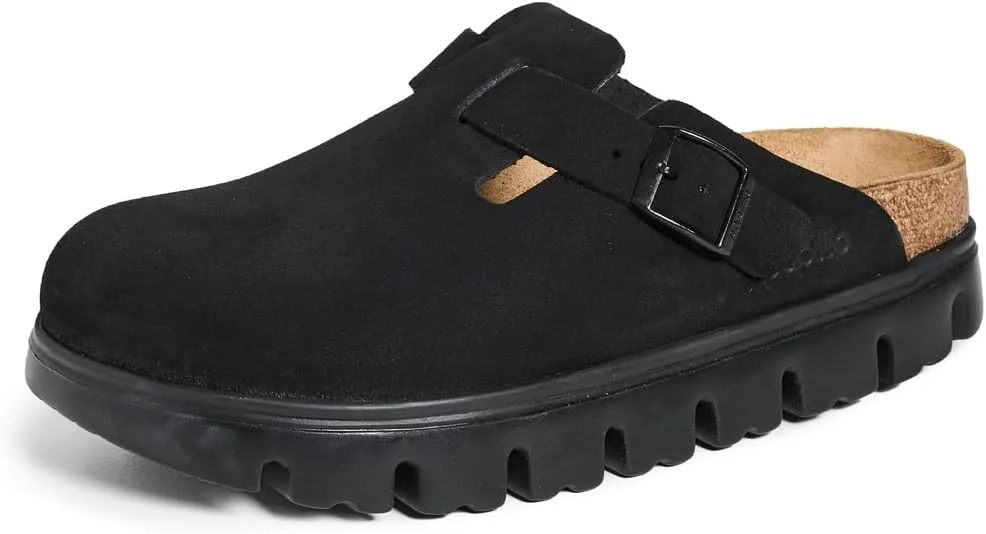
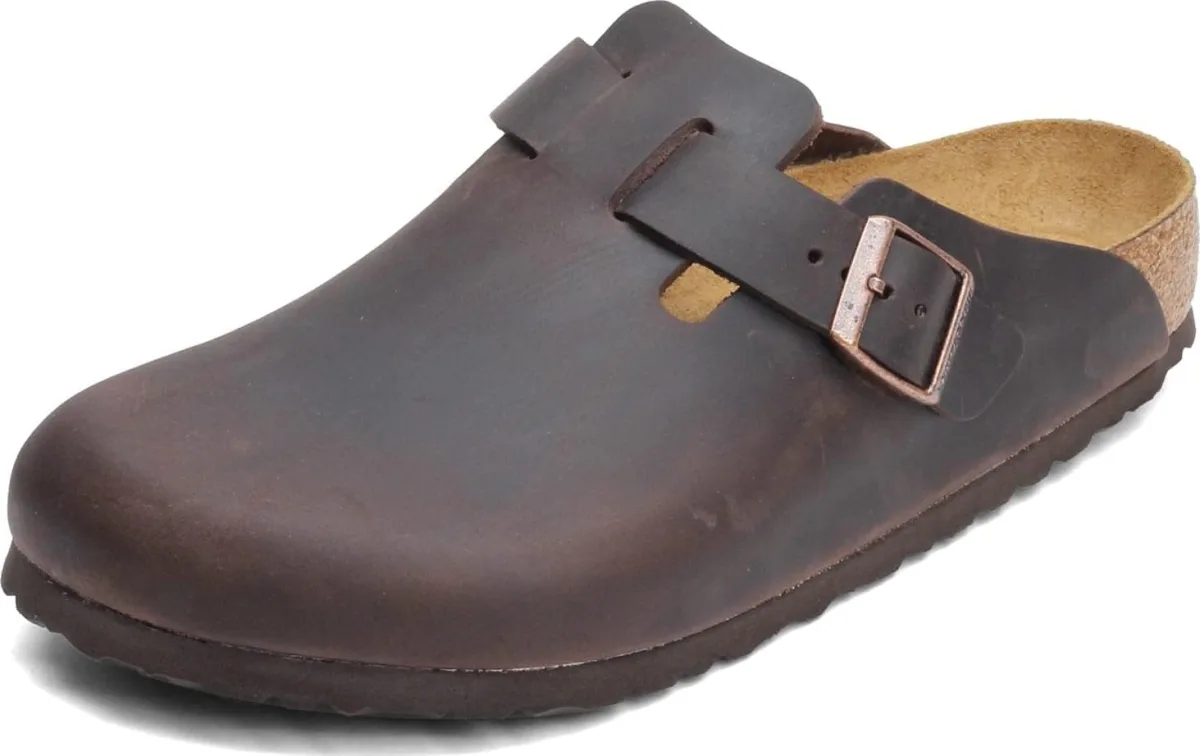
Birkenstock
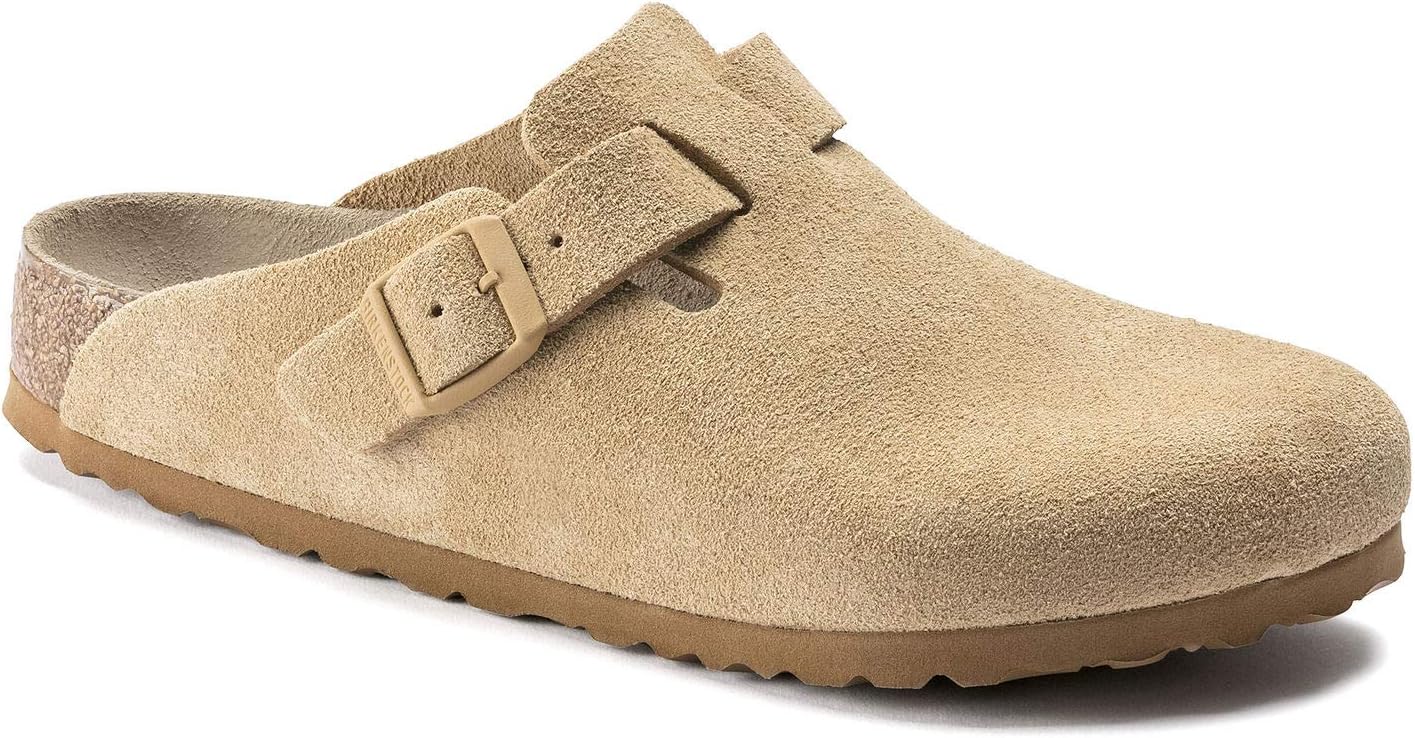
Birkenstock Women's Boston Suede Clogs
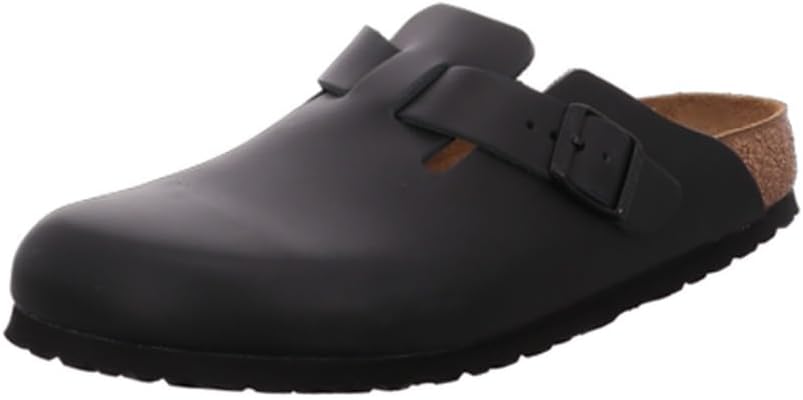
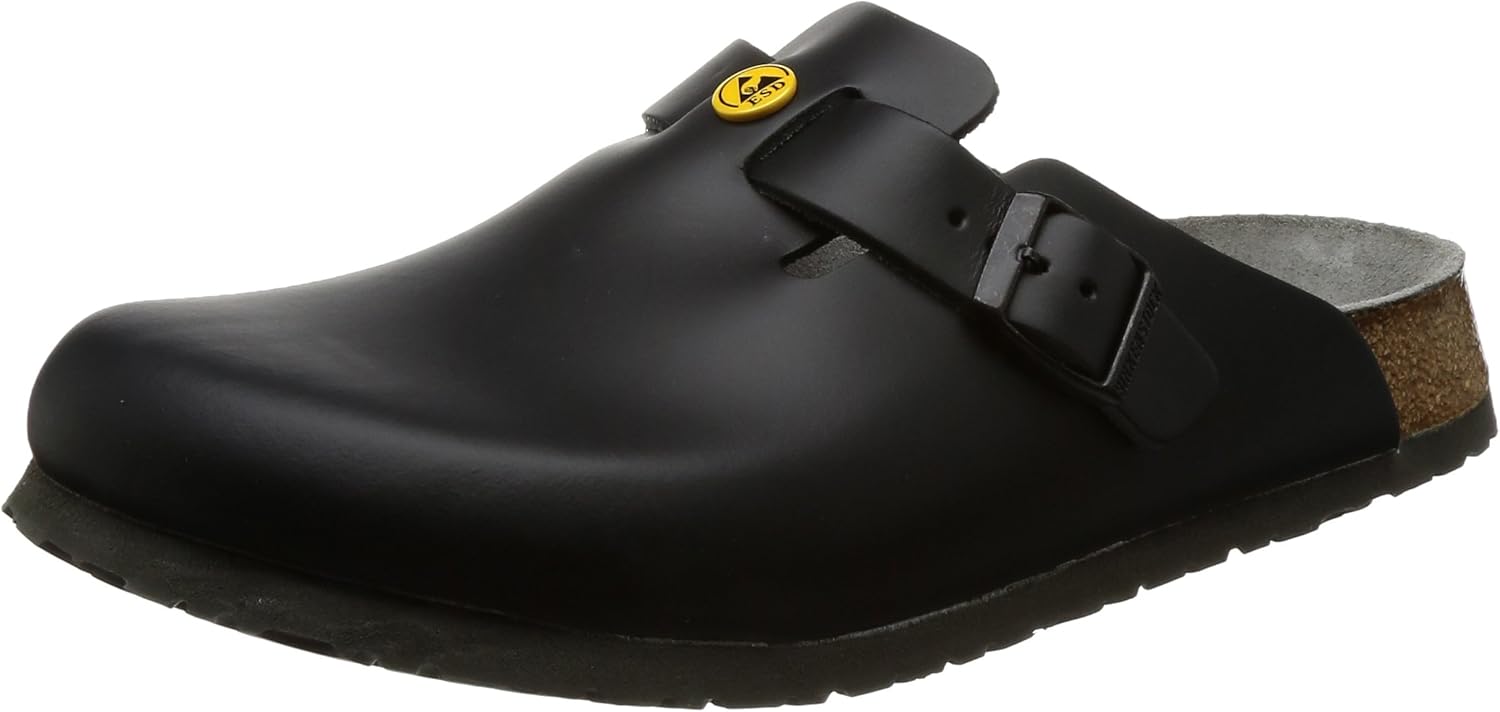
Birkenstock
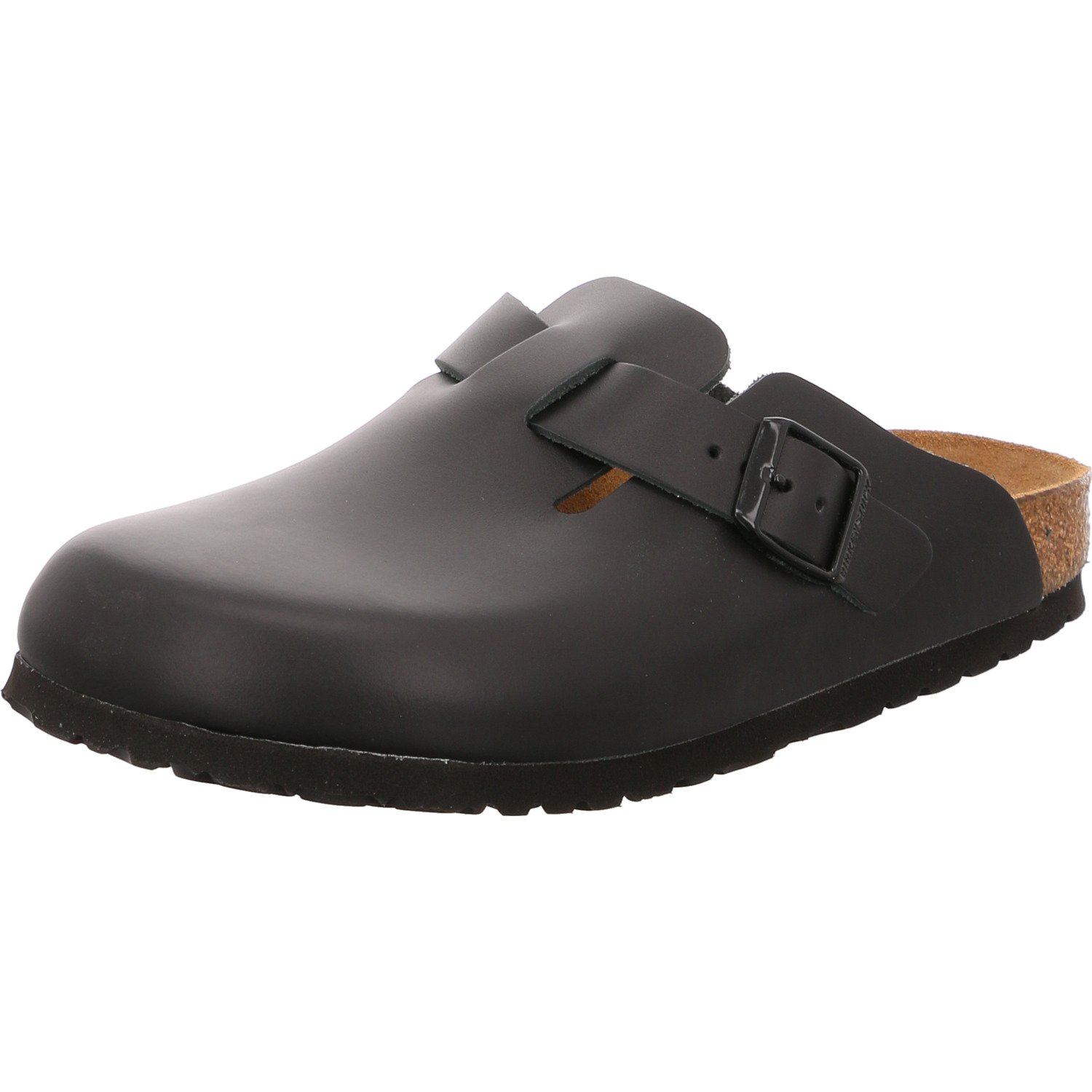
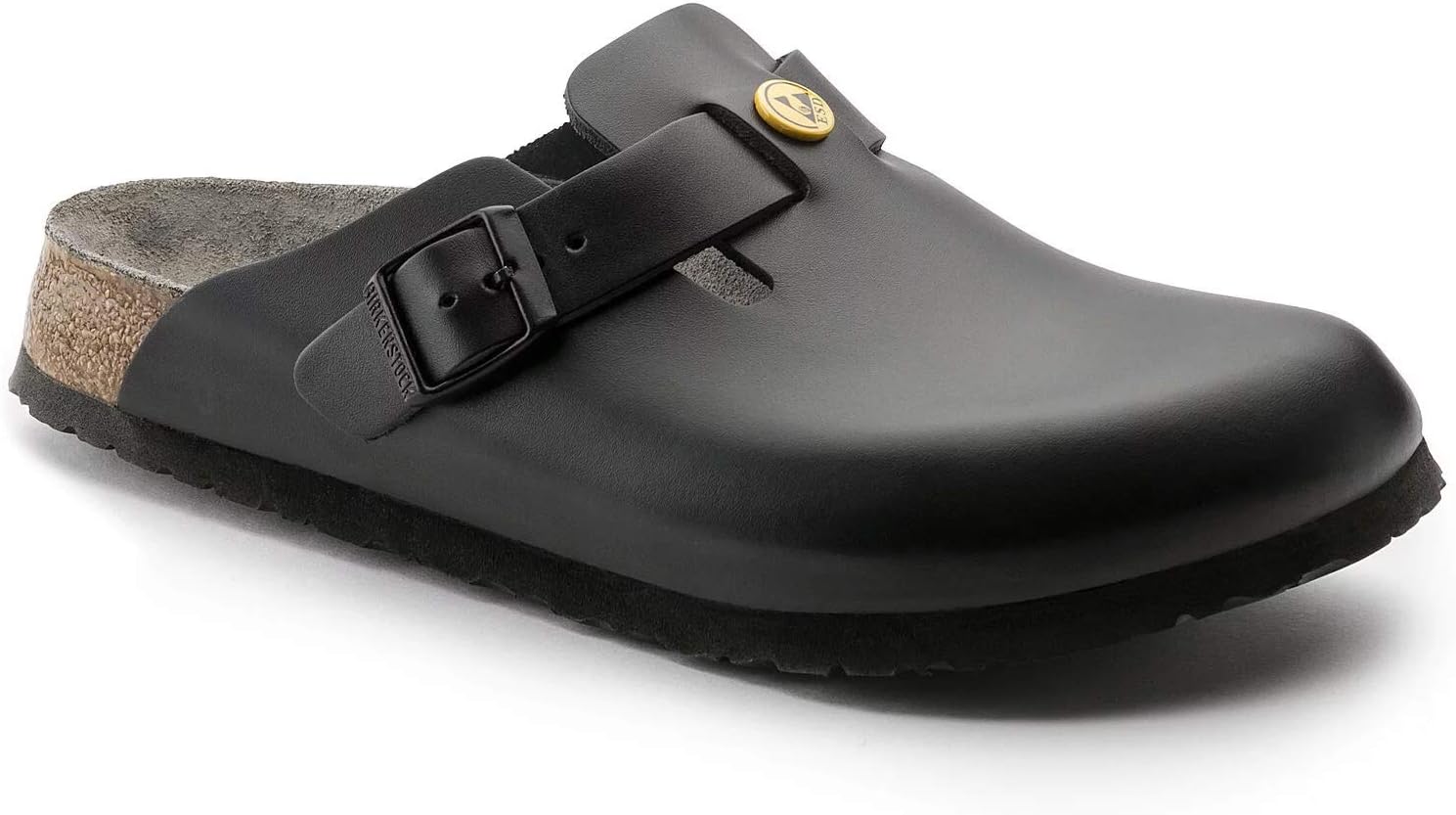
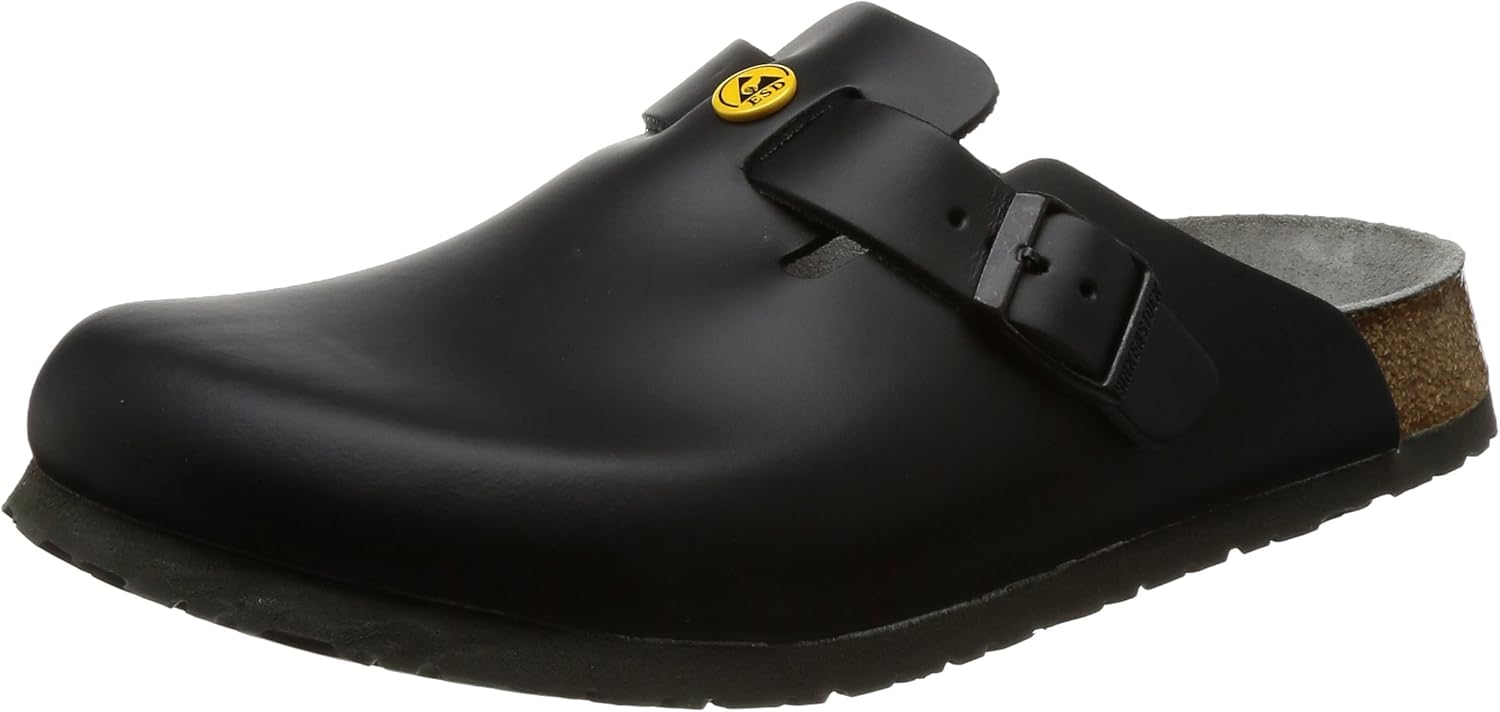
Birkenstock Boston, Men's Boston Anti-Static Natural Leather Normal Footbed
CorkEVA SoleBuckle
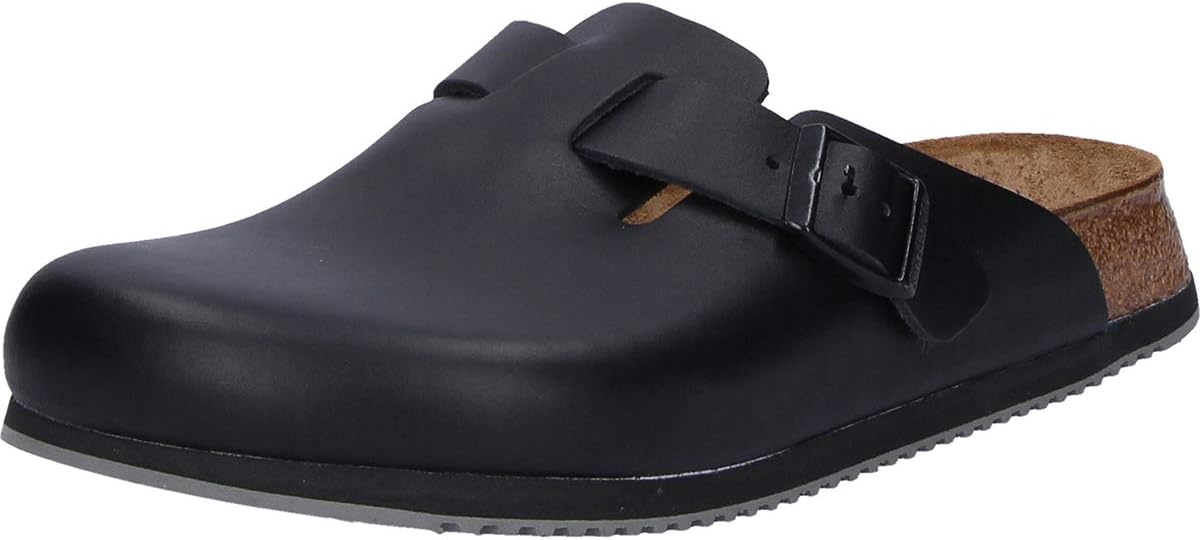
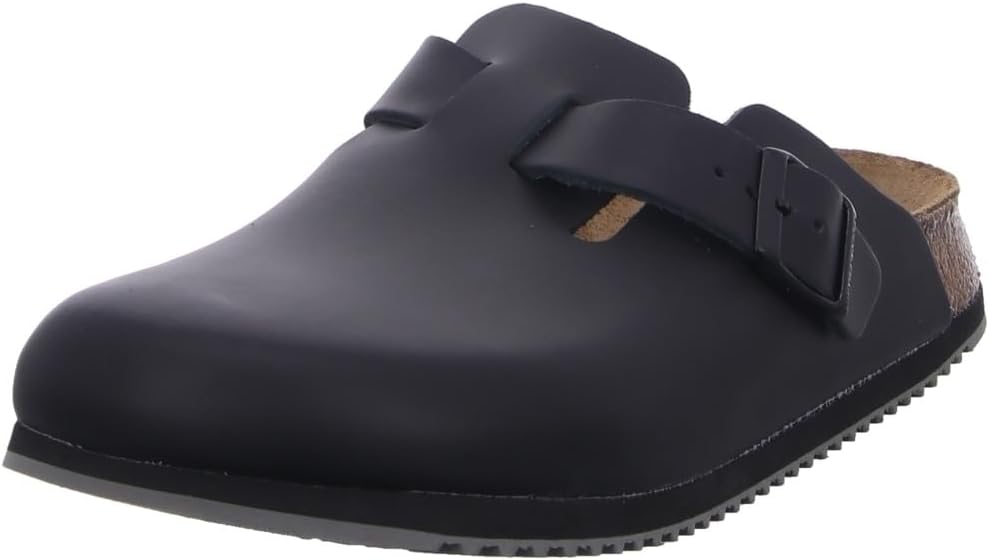
Birkenstock
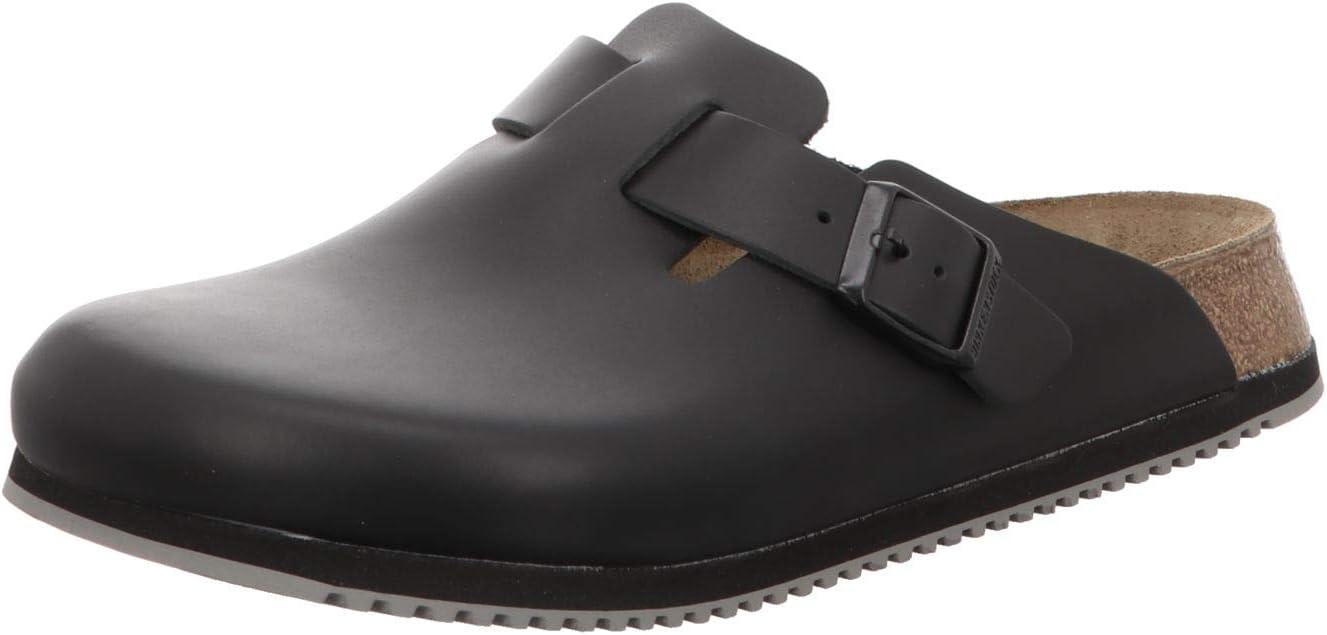
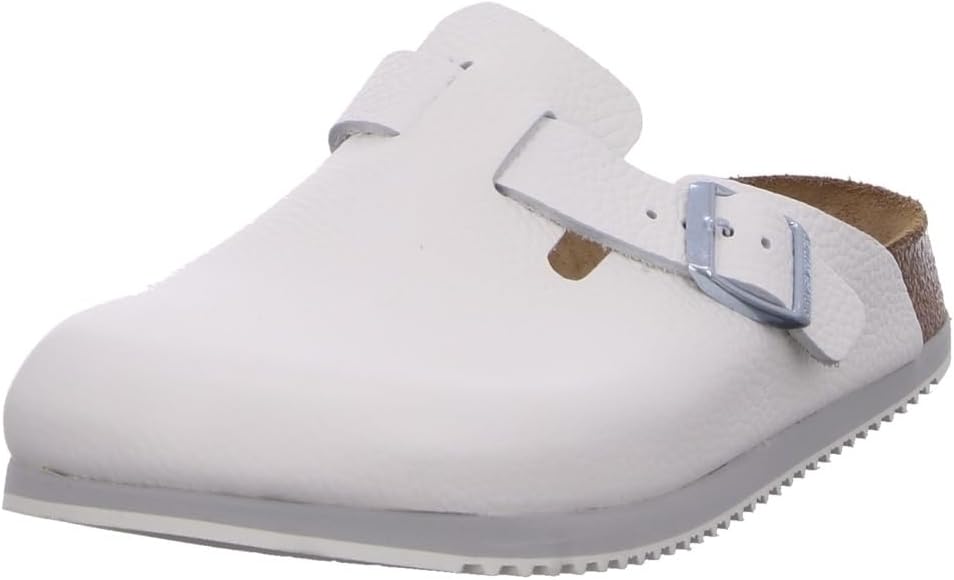
Birkenstock Professional Boston Unisex Clogs
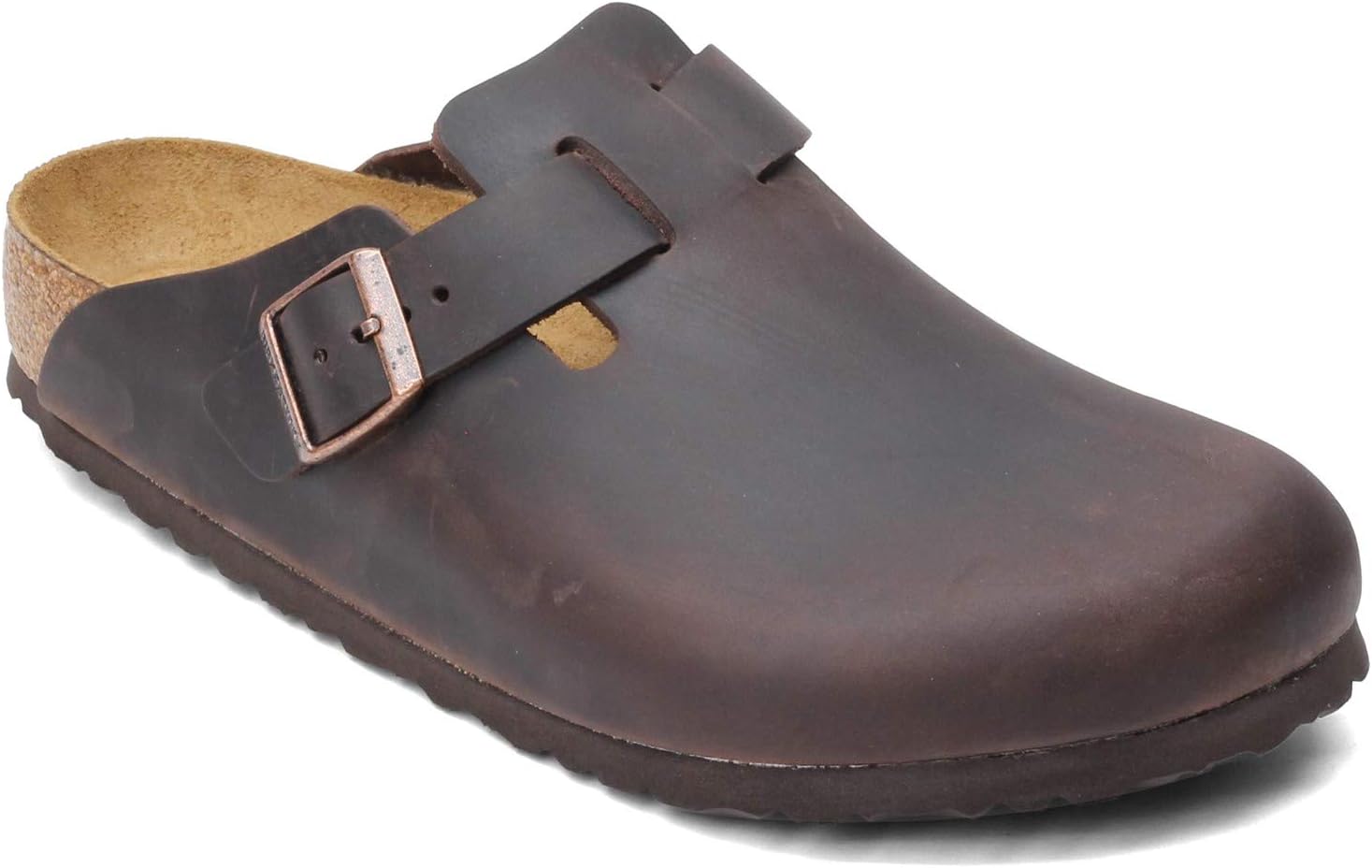
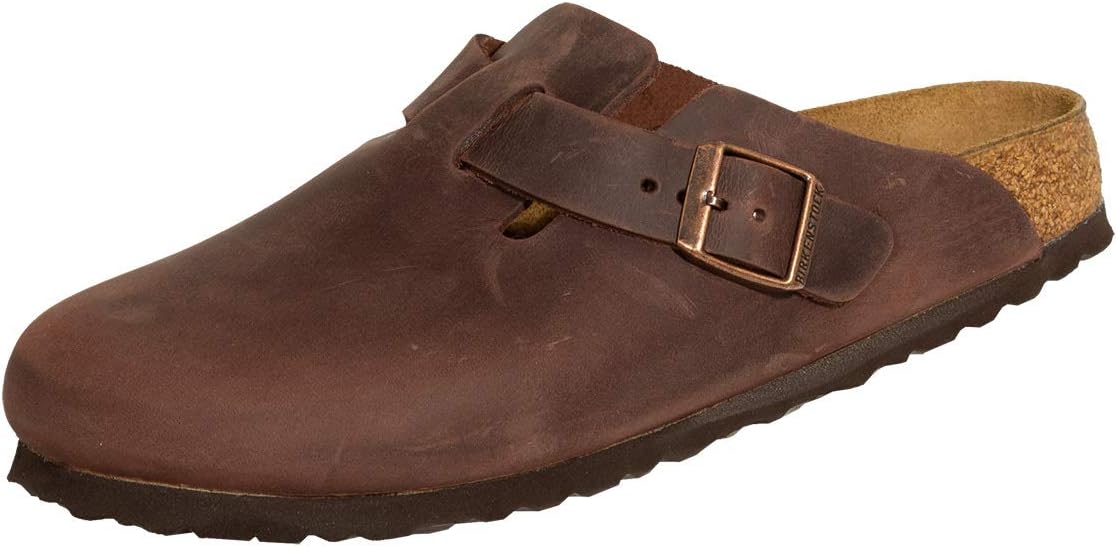
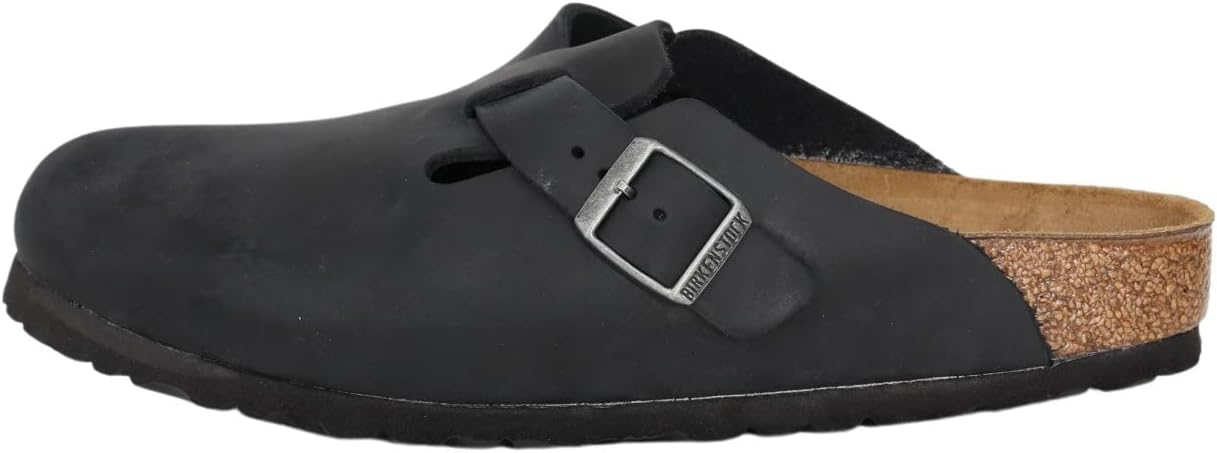
Birkenstock
Birkenstock Unisex Boston Soft Footbed Clogs
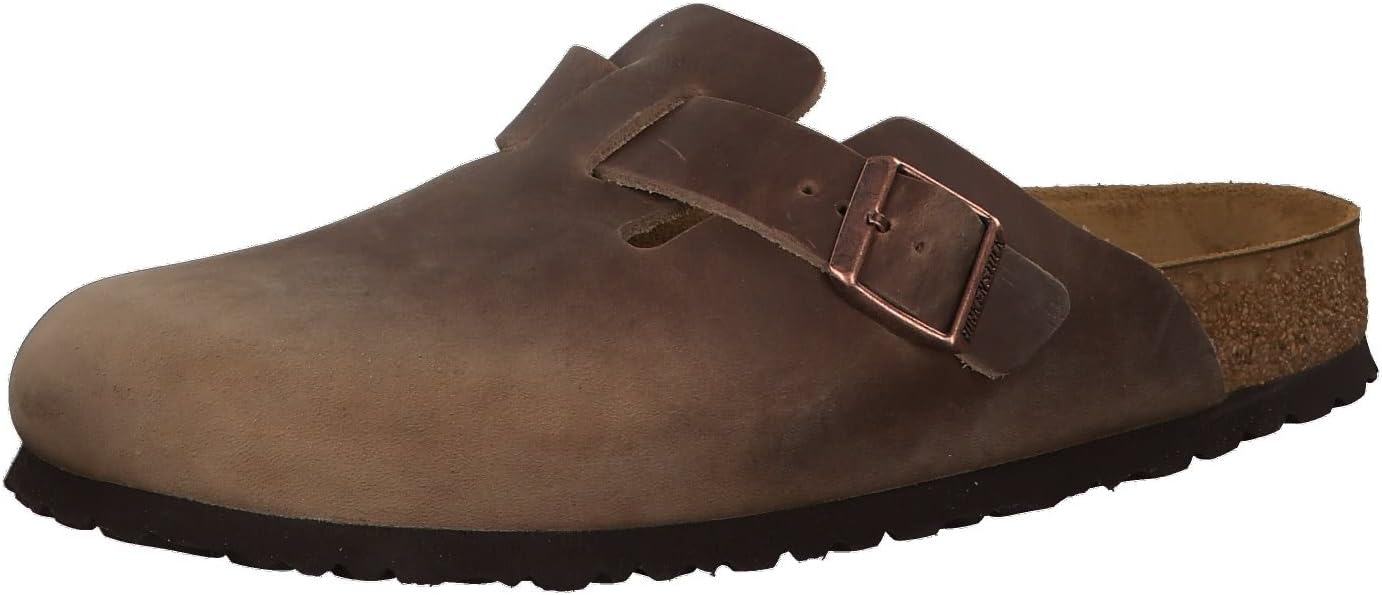
Birkenstock
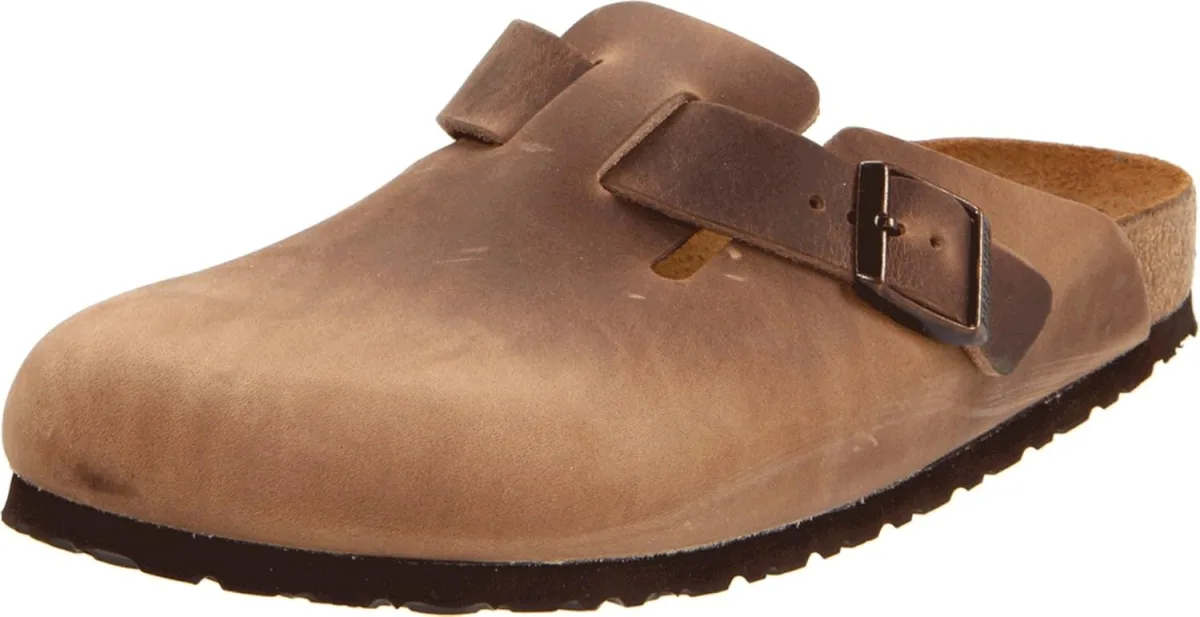
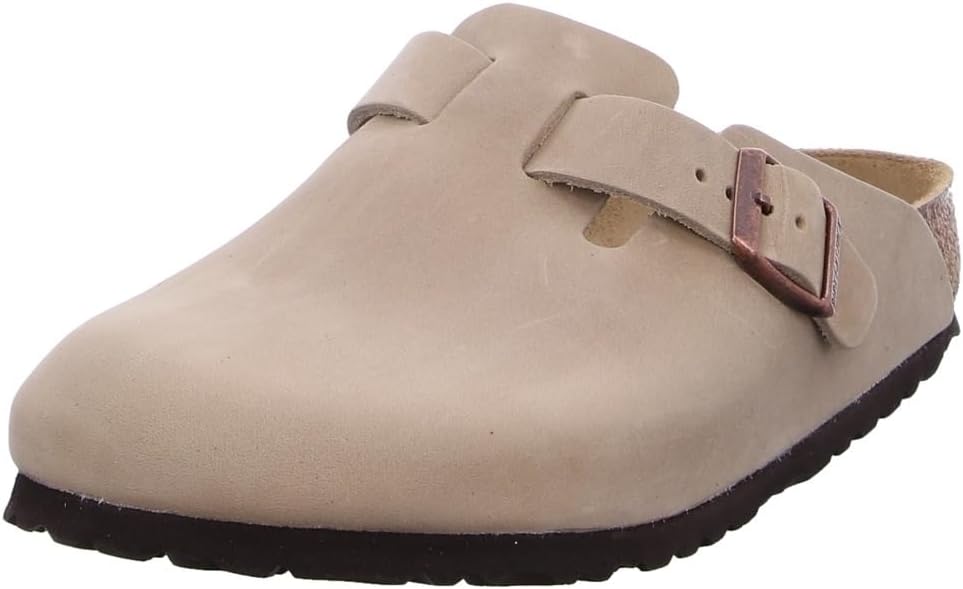
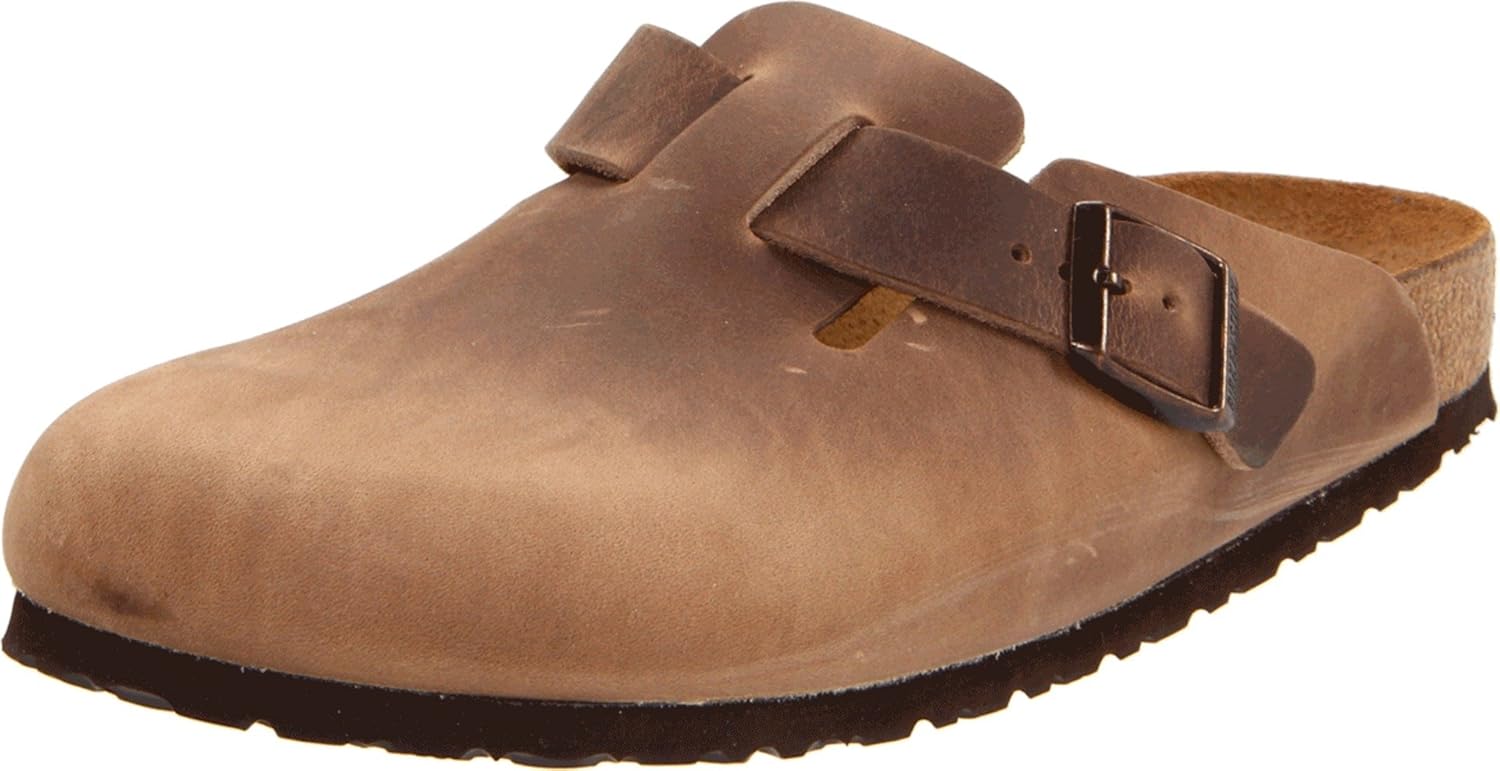
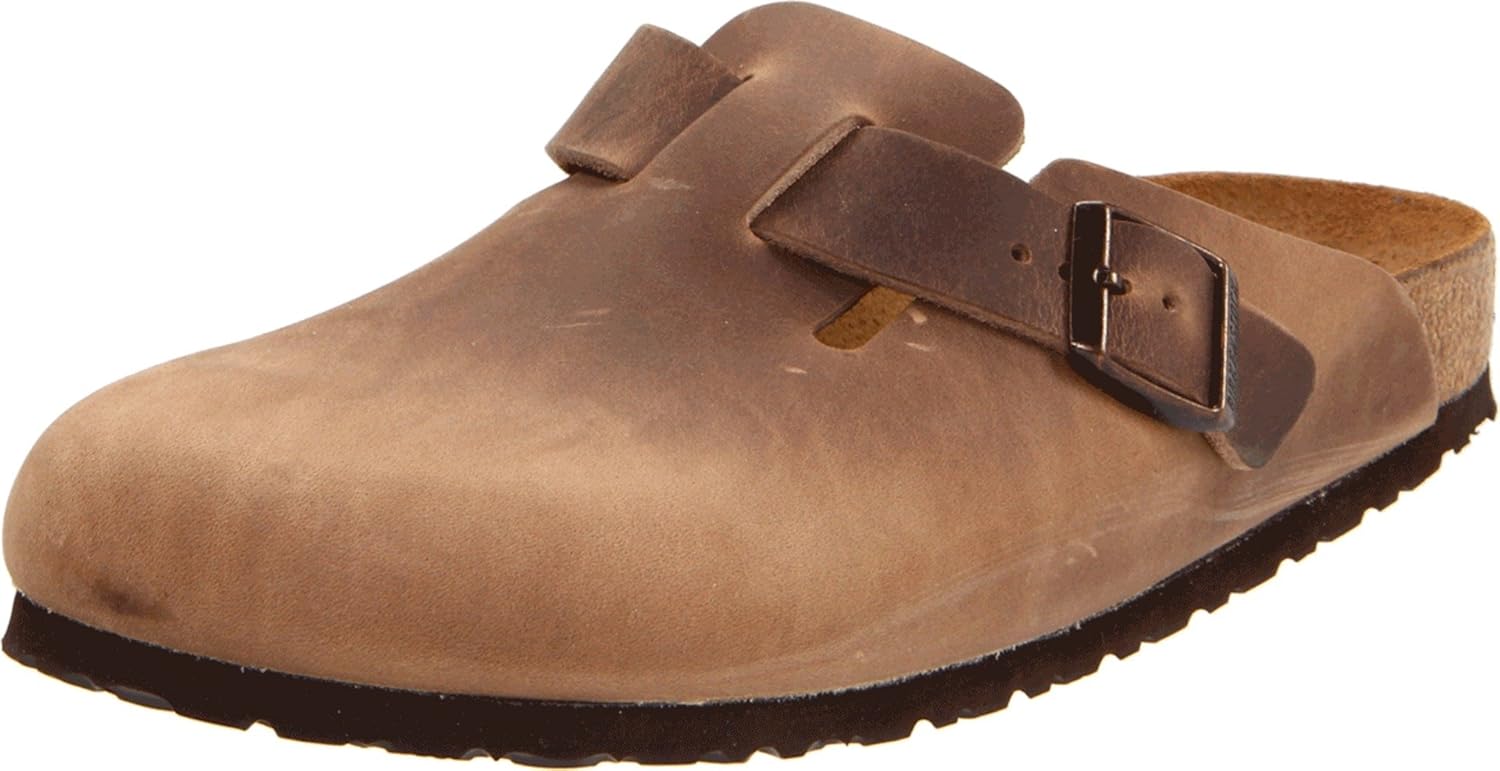
Birkenstock Classic Boston Unisex Adult Clogs, Tobacco Brown, 42 EU Schmal
EVA SoleAdjustable Strap
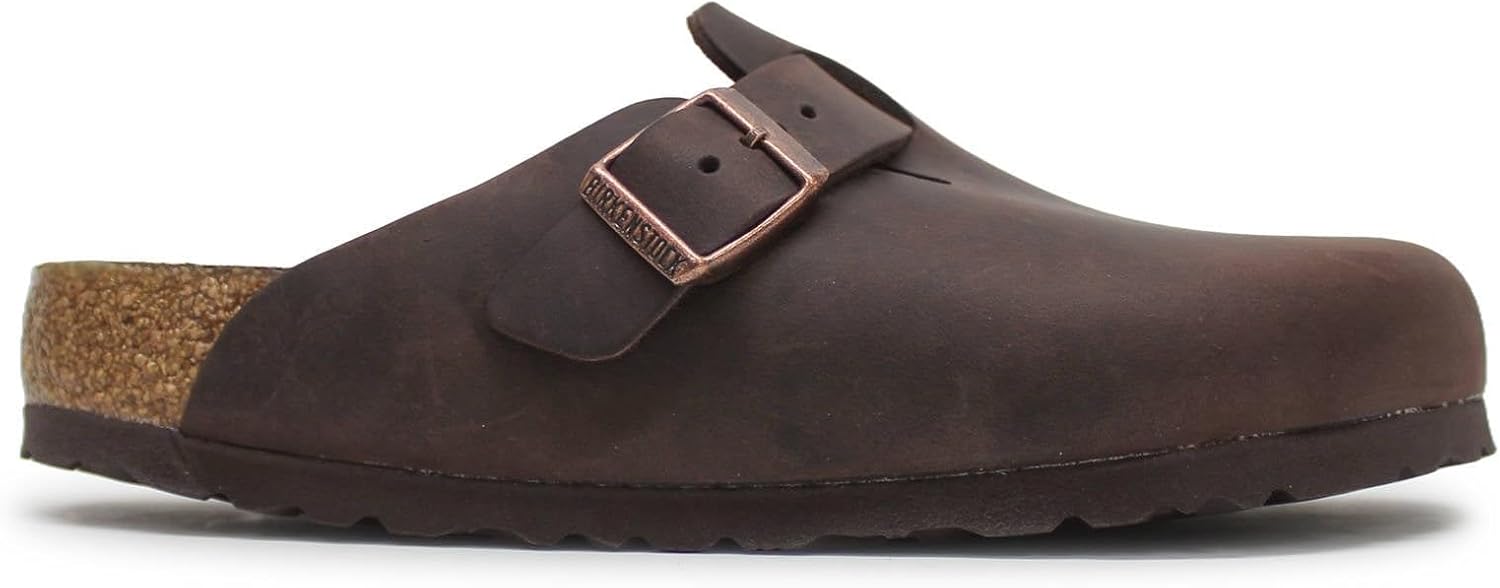
Birkenstock
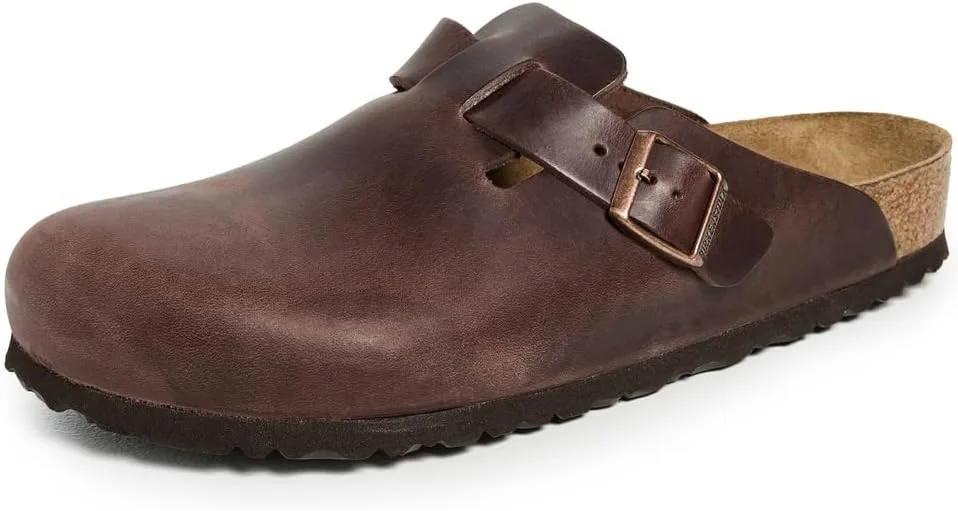
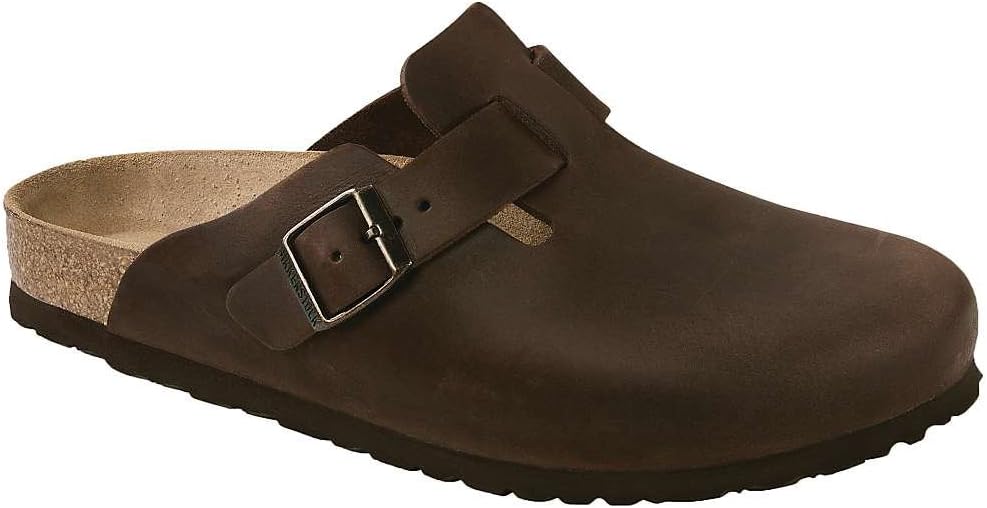
Birkenstock Unisex Boston Soft Footbed, Habana Oiled Leather, 43 M EU
Cork FootbedBuckle
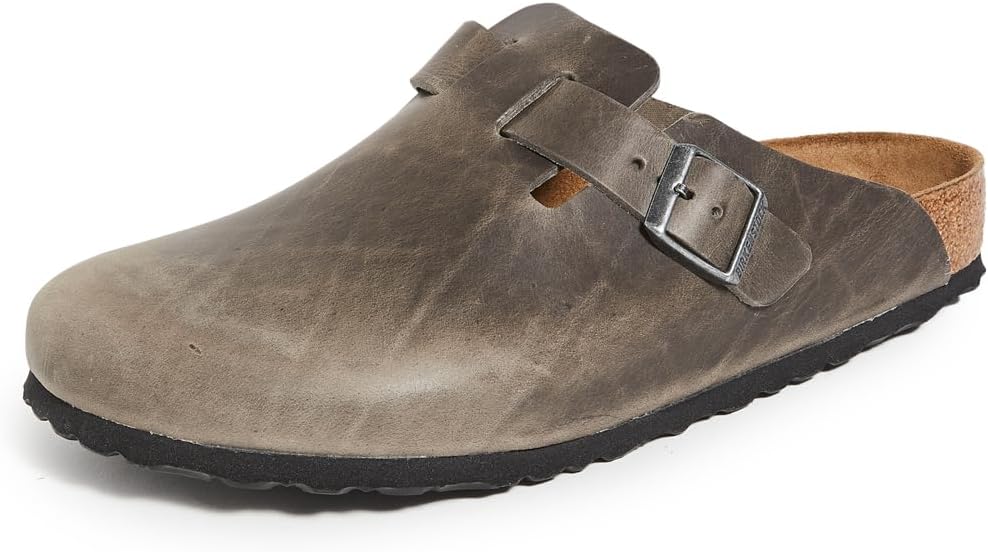
Birkenstock
Birkenstock Men's Boston Soft Footbed Clogs, Iron, 10 Medium US
Cork FootbedEVA SoleBuckle
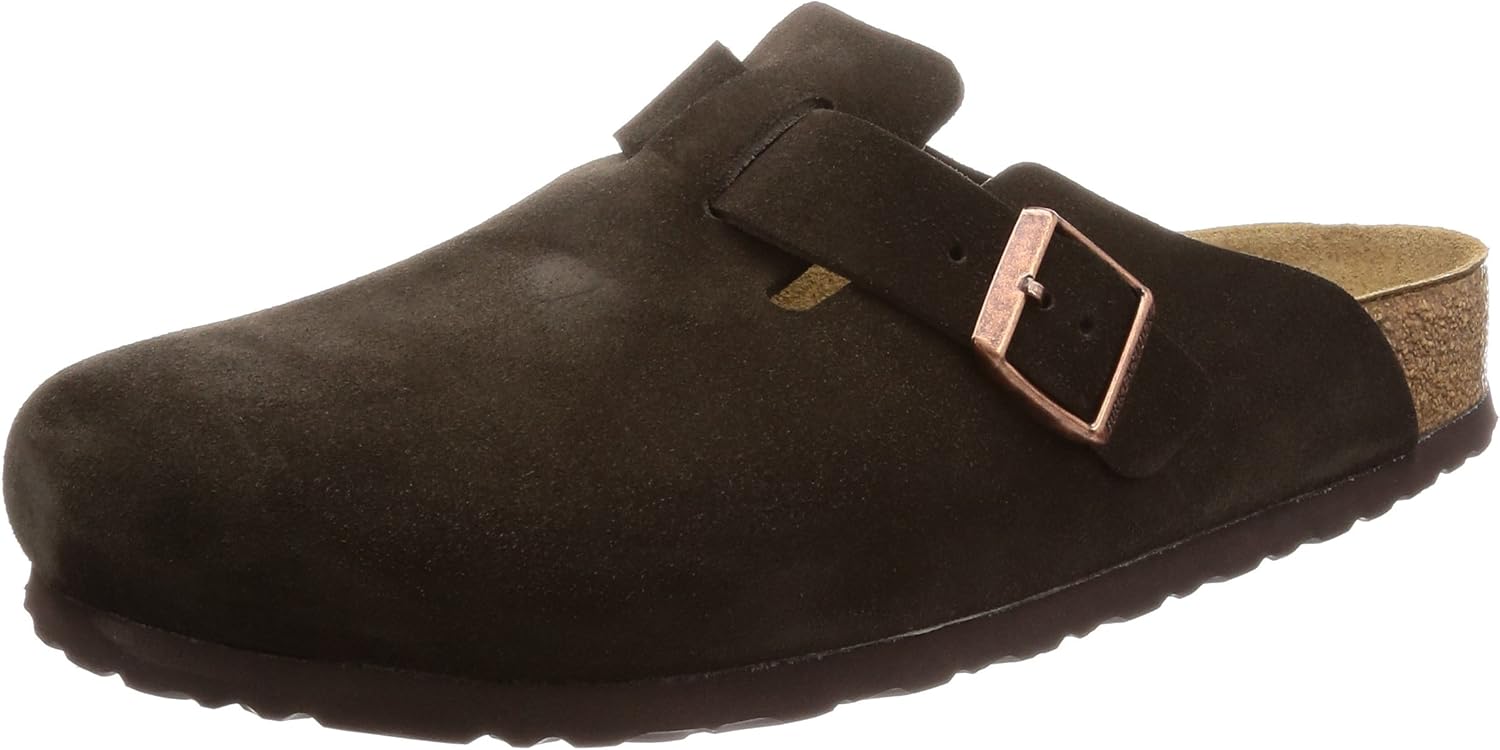
Birkenstock
Birkenstock Women's Boston Soft Footbed Clogs
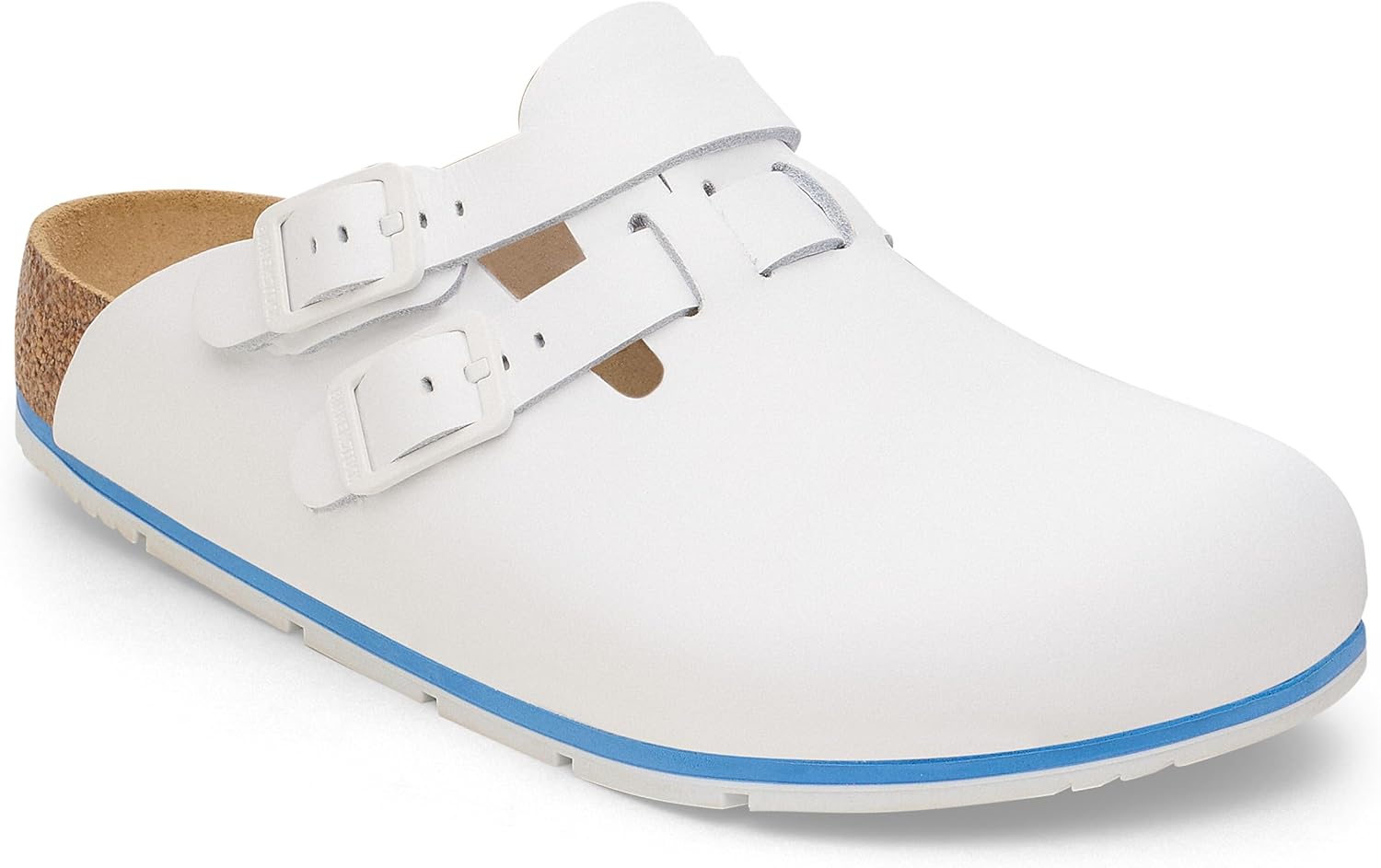
What the Boston is
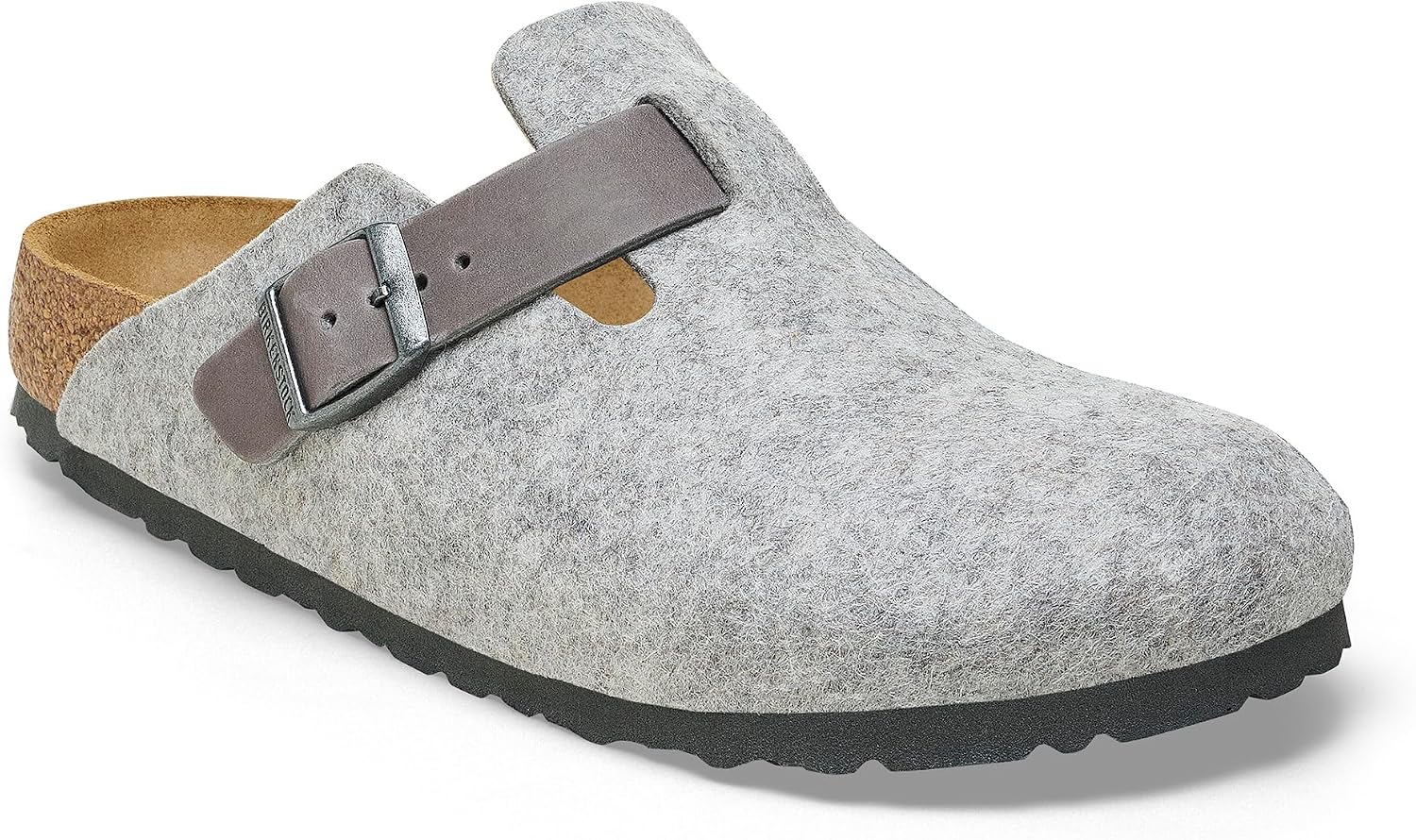
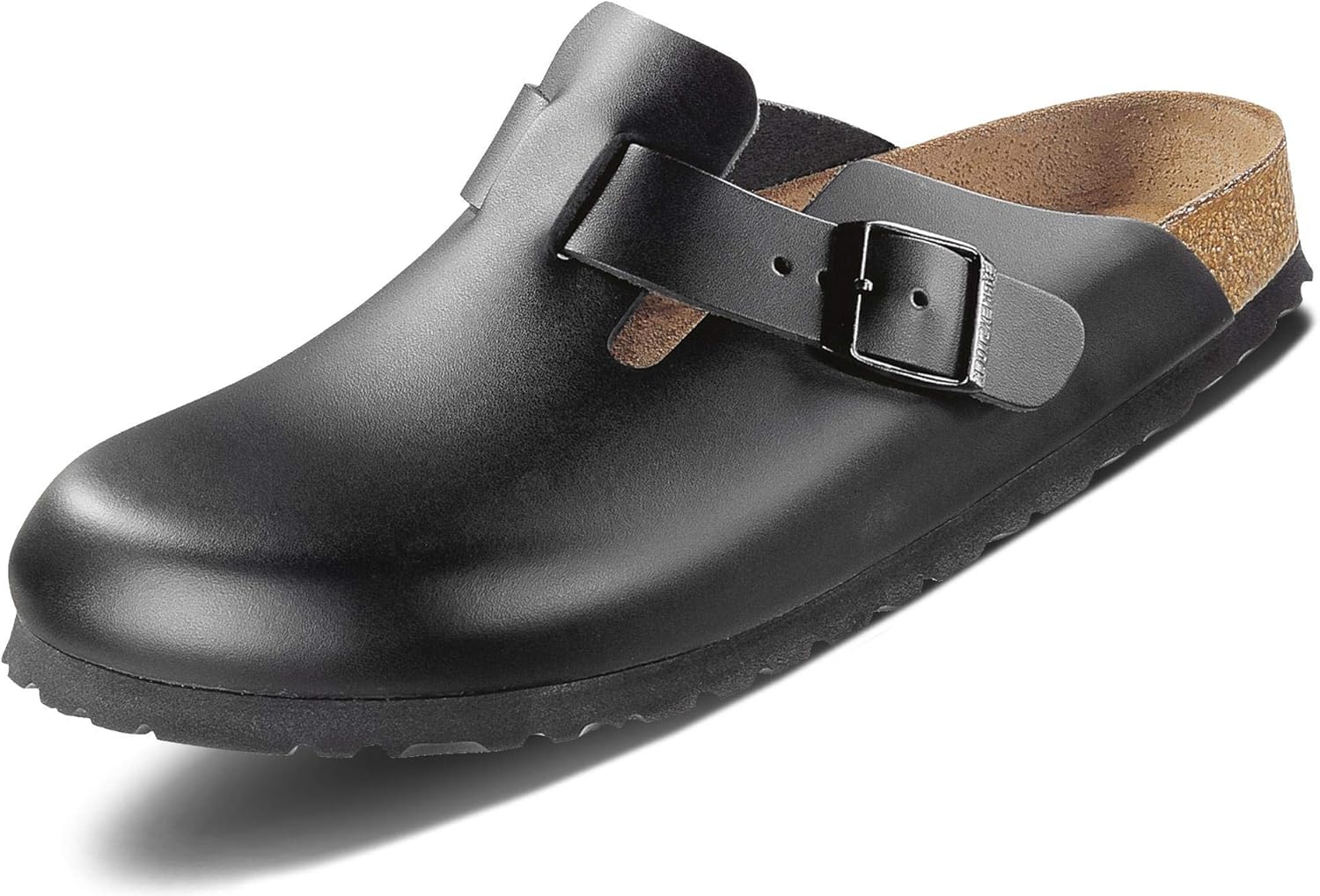
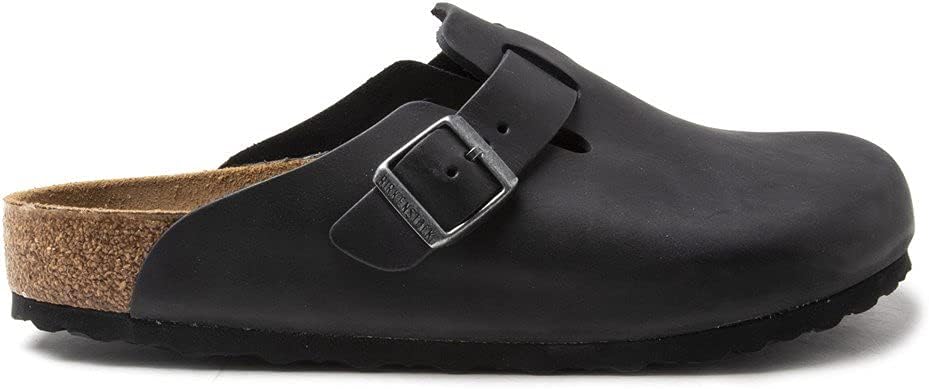
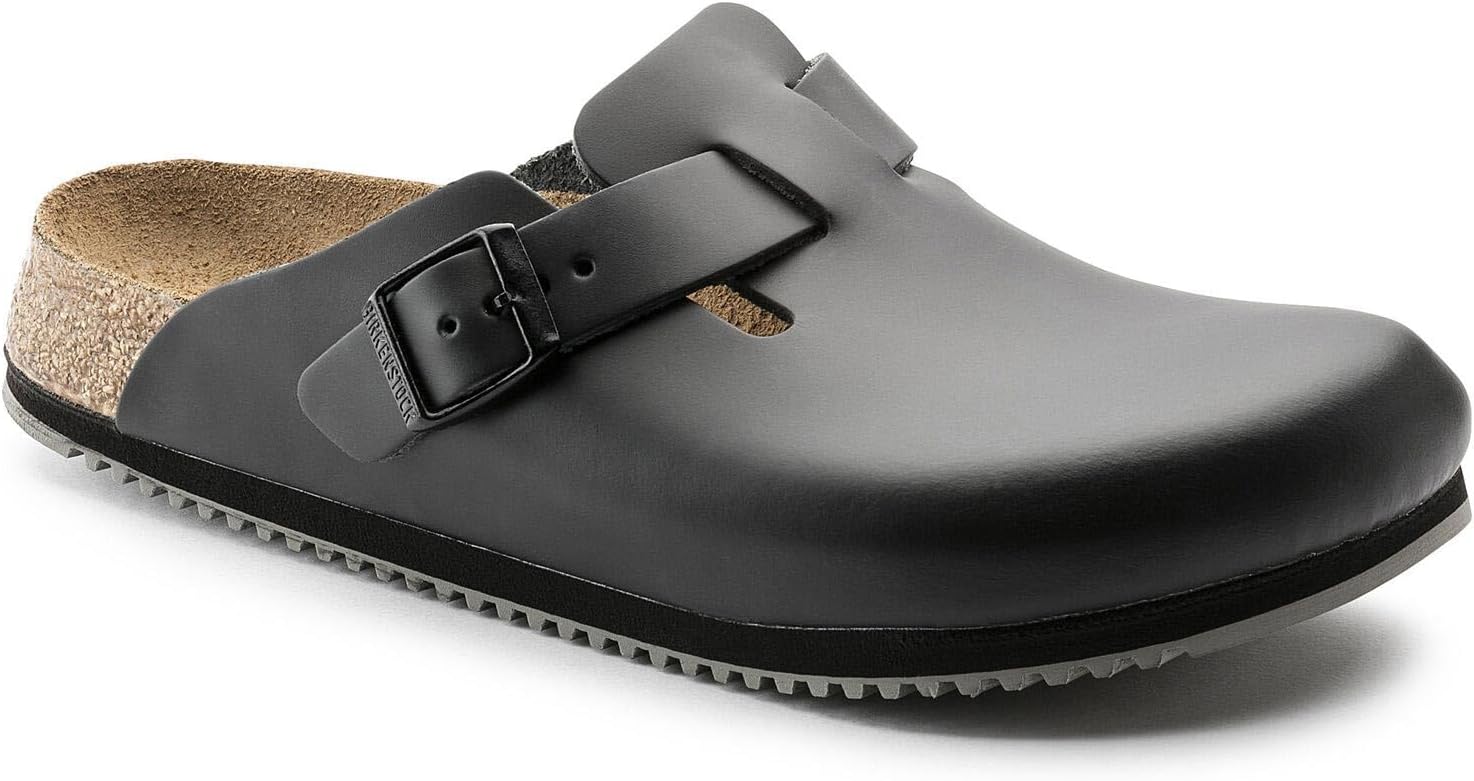
A closed-toe, open-heel clog built on Birkenstock's standard cork-and-latex footbed, with a single adjustable buckle across the instep and an EVA outsole. That is the entire design. Everything that varies between versions is the upper material and the footbed lining.
The open heel is the point. It vents heat, it comes on and off without bending down, and it is why the Boston works as an indoor-outdoor shoe in a way a full clog does not.
The materials, and which one to buy
Oiled nubuck
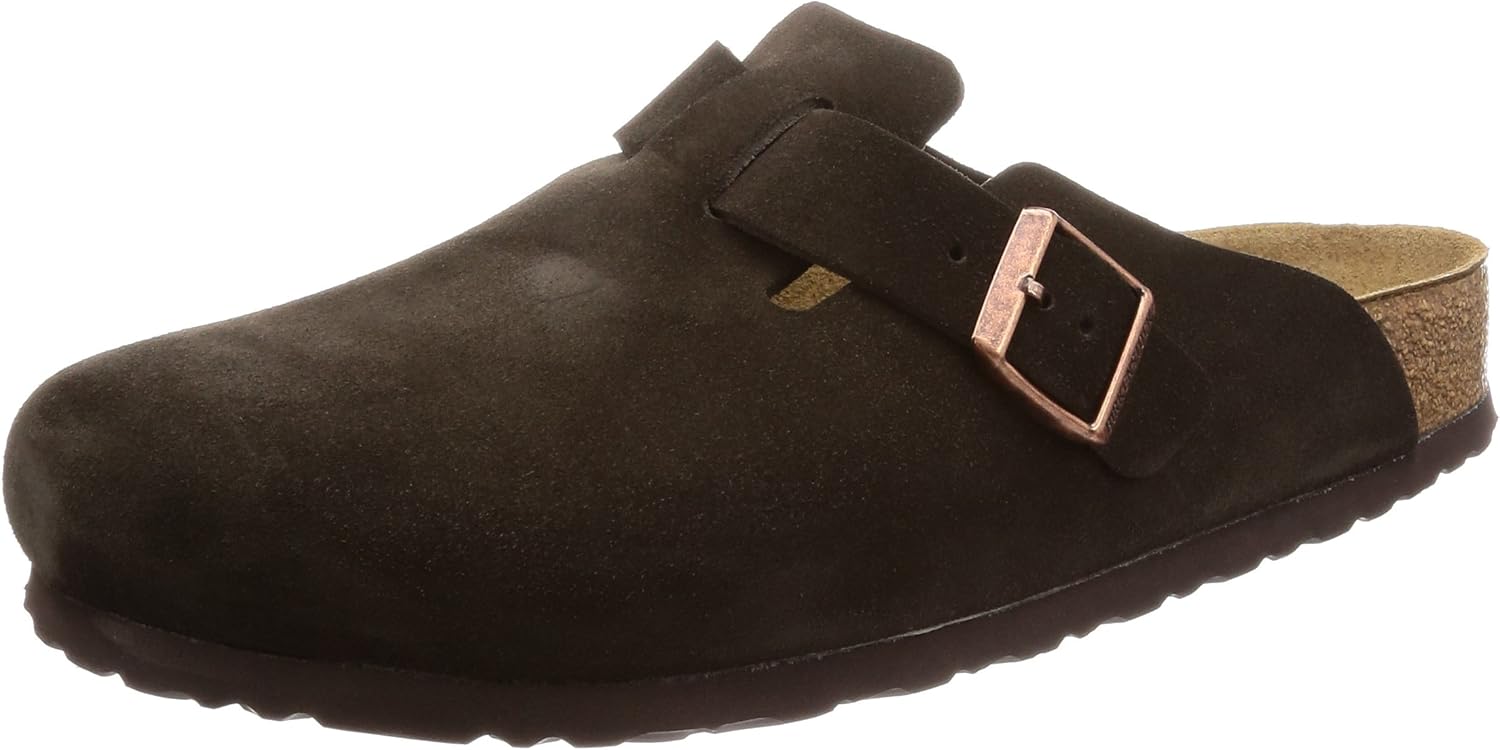
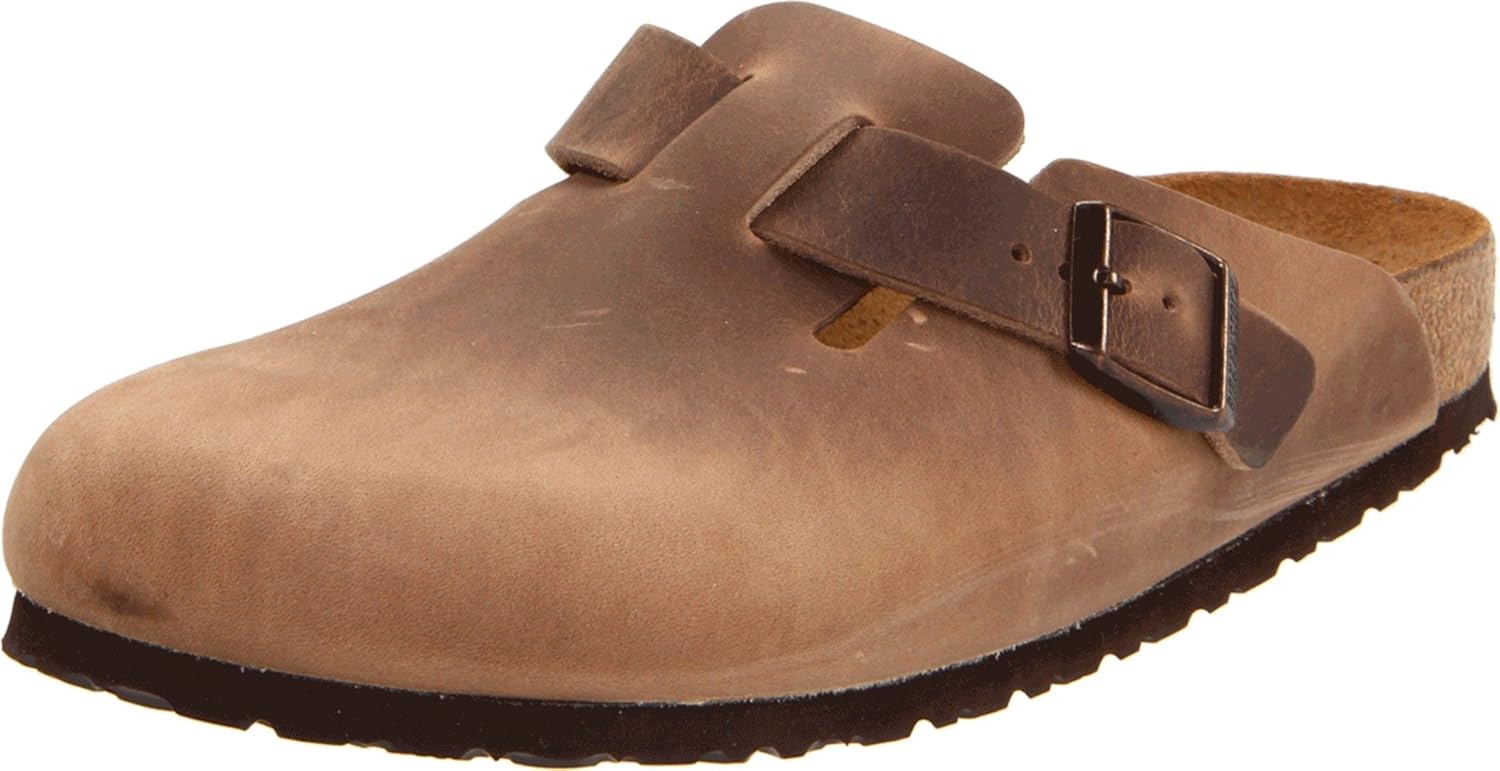
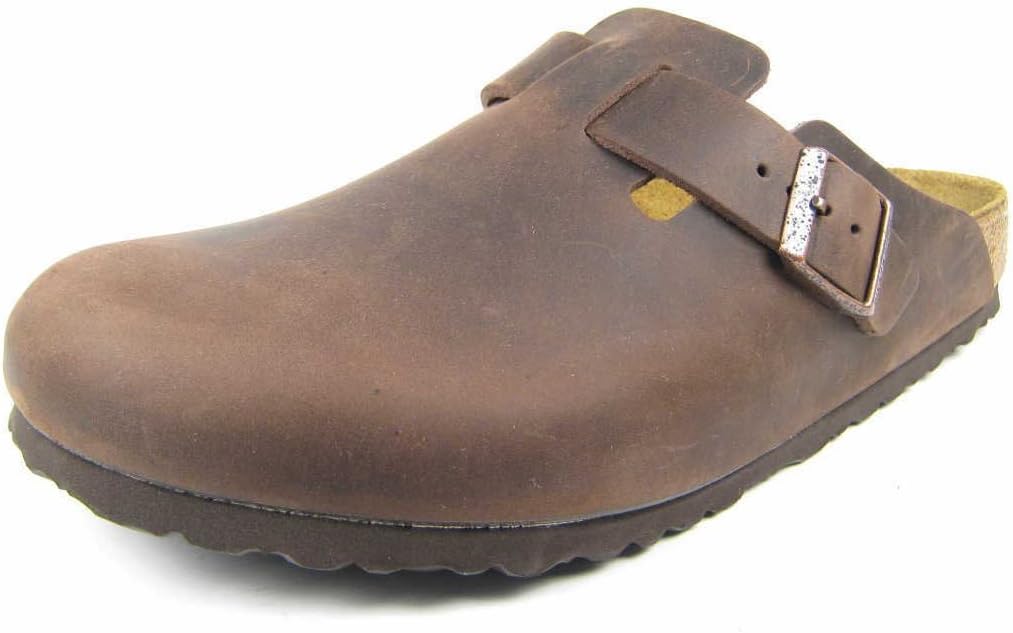
The default recommendation. Nubuck that has been treated with oil, so it takes scuffs without showing them, darkens attractively over a year or two, and accepts conditioner readily. Habana is the darkest of these and ages most dramatically.
Suede
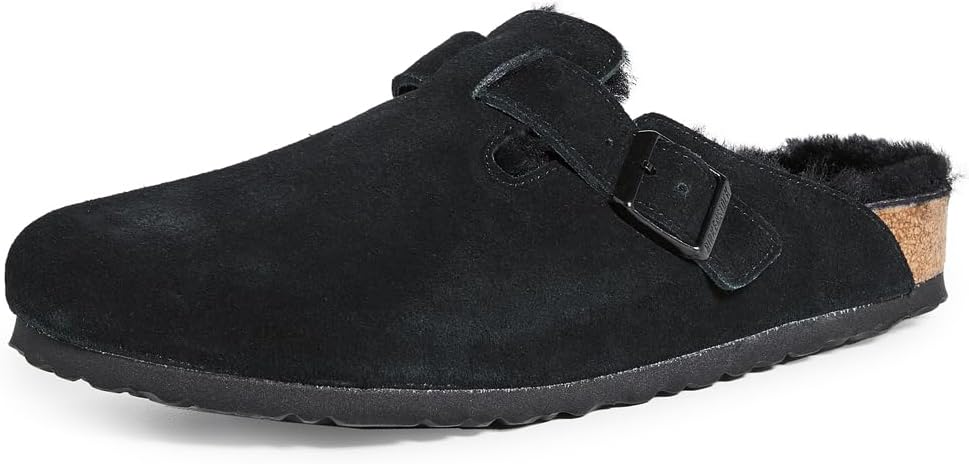
Softest against the foot from the first wear and the most comfortable in week one. It also drinks water and marks easily, so it needs a protector spray from day one and it is a poor choice for wet climates or messy work.
Smooth leather
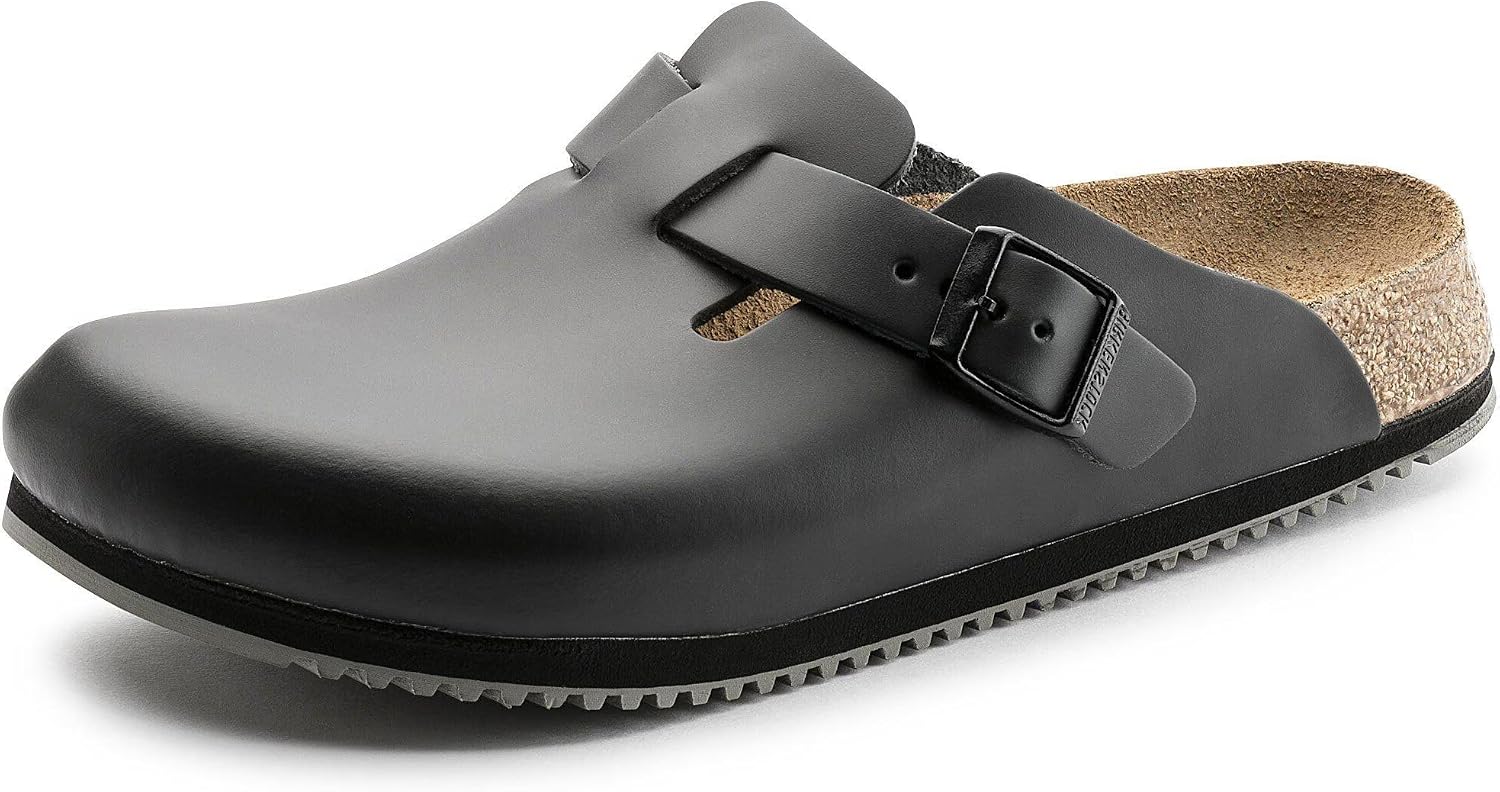
The most formal-looking and the least forgiving. It creases sharply across the vamp rather than moulding, and shows every scuff. Choose it for appearance, not for wear.
Felt and shearling-lined
Winter versions. Warm, and genuinely usable indoors, but the wool compresses over a season and cannot be renewed the way a footbed can.
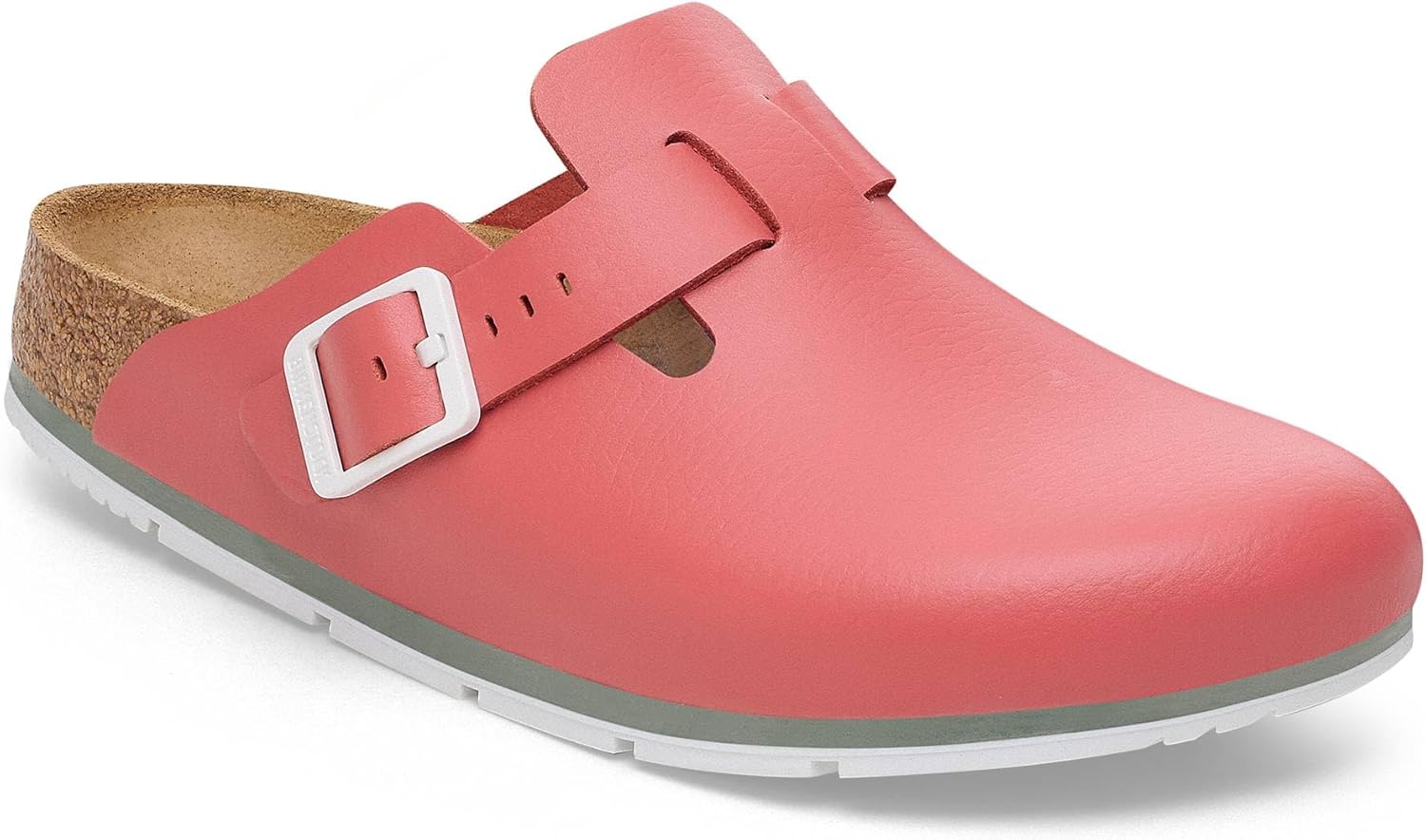
Birko-Flor and Birkibuc
Synthetic. Cheaper, wipeable, and they do not breathe. Reasonable for a shoe that will get splashed; not comparable to leather for all-day wear.
Soft footbed or regular?
The regular footbed is firm cork and latex. The soft footbed adds a foam layer on top.
Soft feels better immediately and is the safer choice if you have never worn a Birkenstock or you have sensitive feet. Regular gives more direct arch contact, moulds more precisely, and is what most long-term wearers prefer once they are through the break-in. Neither is better in the abstract.
Sizing the Boston
Birkenstock sizes in EU only, in two widths. Ignore the US conversion on the box and read the footbed instead:
- The ball of your foot should sit over the widest part of the footbed
- Roughly a centimetre of space in front of your longest toe
- Your heel should sit inside the moulded heel cup, not on the back edge
- Your foot should not spill over the sides — if it does, you need the wider fit, not a longer size
Width matters as much as length. Regular and narrow are genuinely different lasts, and sizing up to fix a width problem gives you a shoe that slides at the heel.
Break-in: two to three weeks, and why people give up too early
The cork footbed starts firm. Over two to three weeks of a few hours a day, body heat and pressure compress it into the shape of your arch. After that it holds that shape permanently — which is also why a broken-in pair fits you and nobody else.
Arch soreness in week one is normal. A specific pressure point is not, and will not resolve. The most common mistake is wearing them all day from the start, deciding they hurt, and returning them at day four.
The one maintenance job that matters
Seal the exposed cork rim once or twice a year. Untreated cork dries out and crumbles at the edges after a couple of years; sealed cork does not. It costs very little and it is the difference between a three-year pair and a fifteen-year one.
Both the footbed and the sole can be replaced by a cobbler or through Birkenstock's own repair service, which is the real argument for the price.
Boston or Tokio?
The Tokio is the same footbed with an open toe area and a strap that folds down. Lighter, cooler, less enclosing. The Boston covers the whole forefoot, which is what makes it a year-round shoe and what makes it acceptable in workplaces where the Tokio is not.
Common questions
How should Birkenstock Boston clogs fit?
Fit by the footbed, not the size label. The ball of your foot sits over the widest part, with about a centimetre in front of your longest toe, and your foot should not spill over the edges. If it does, you need the wider fitting rather than a longer size.
Should I get the soft footbed or the regular Boston?
Soft feels better immediately and is the safer first Birkenstock. Regular moulds more precisely and is what most long-term wearers prefer after break-in. If you have sensitive feet or have never worn a cork footbed, start with soft.
How long does it take to break in a Boston?
Two to three weeks of a few hours a day. Generalised arch soreness in week one is normal and resolves. A specific pressure point is a fit problem and will not.
Which Boston material is best?
Oiled nubuck for most people — it hides scuffs, darkens well and takes conditioner. Suede is softer but absorbs water. Smooth leather looks smartest and marks most easily.
Can Birkenstock Bostons be resoled?
Yes. Both the footbed and the outsole can be replaced, through a cobbler or Birkenstock's repair service. Sealing the exposed cork once or twice a year prevents the crumbling that otherwise ends a pair's life.
What is the difference between the Boston and the Tokio?
Same footbed and buckle; the Tokio has an open toe area and a strap that folds down. The Boston encloses the whole forefoot, which makes it a year-round shoe and acceptable in workplaces where an open shoe is not.