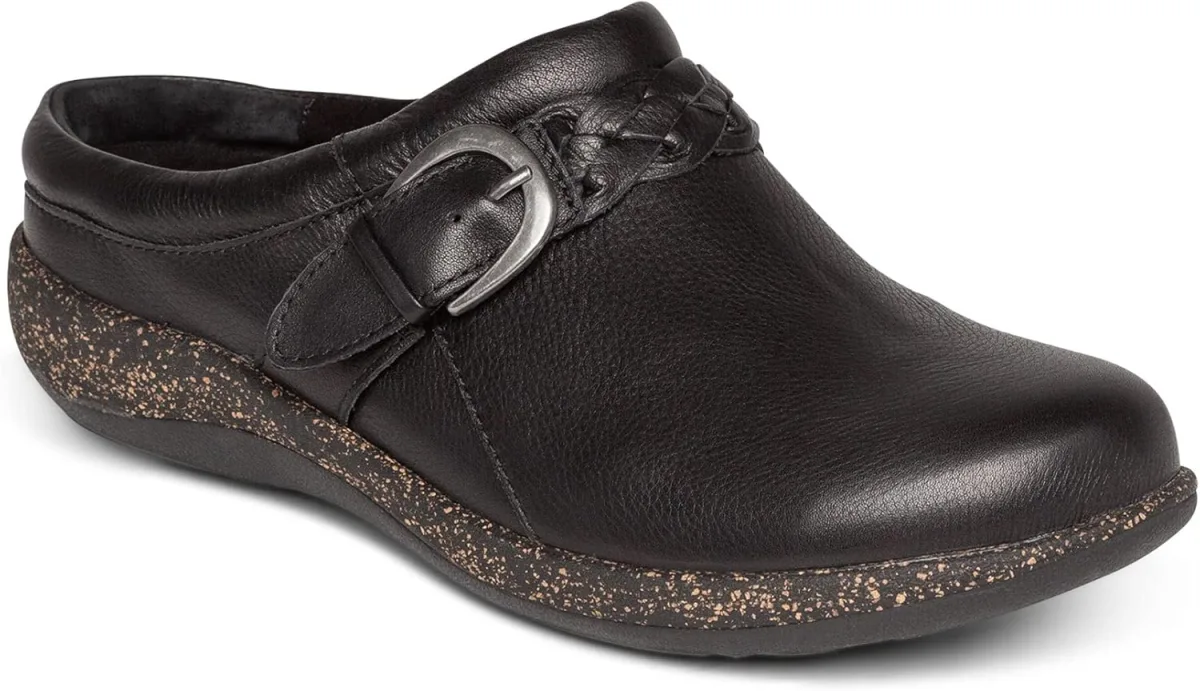
Aetrex
Aetrex Libby Orthopedic Arch Support Comfort Leather Clogs for Women
Cork footbedRubber outsoleBuckle
Guide
A practical walk through footbeds, soles, uppers and fit — the four things that decide whether a leather clog works for your feet and your floor.
The single most useful question is not "which brand" but "what am I standing on, and for how long". A tiled hospital corridor, a wet restaurant kitchen and a wooden classroom floor punish shoes in completely different ways.
Hard, dry, flat floors for eight hours or more reward rigidity. A stiff sole stops your foot flexing thousands of times a shift, which is where a lot of end-of-day ache comes from. Wet or greasy floors reward grip above everything else, which means a rubber outsole with a real tread pattern, not a smooth wooden base.
Cork and latex starts uncomfortably firm. Over roughly two to three weeks of regular wear, body heat and pressure compress it into the shape of your arch, and it stays there. This is the Birkenstock approach. If you give up in week one you will never find out whether it suited you.
Memory foam is the opposite curve: excellent immediately, then a slow decline as the foam takes a permanent set. For occasional wear that trade is fine. For daily standing it is a poor bet.
Moulded EVA or polyurethane sits in between — no break-in, no real moulding, but it holds its shape far longer than foam.
A wooden or rocker sole does not bend at the ball of the foot. Instead it rolls, which is why Dansko-style clogs feel odd for the first day and then oddly easy. People with plantar fasciitis often do well with them for exactly this reason: the fascia is not repeatedly stretched.
Flexible rubber soles feel more natural, grip better, and are lighter. They ask more of your foot muscles over a long shift.
The words on a listing are not regulated as tightly as people assume.
An open-back clog should hold at the widest part of your foot, not the heel. If you are gripping with your toes to keep it on, it is too big — and this is by far the most common sizing mistake. Your heel should sit roughly a centimetre in from the back edge of the footbed.
Closed-back clogs size closer to normal shoes, but leather stretches across the width and not the length. If you are between sizes, size down in width-adjustable styles and up in rigid wooden ones.
Feet swell over a shift. Try clogs at the end of the day, not the start.
Aetrex
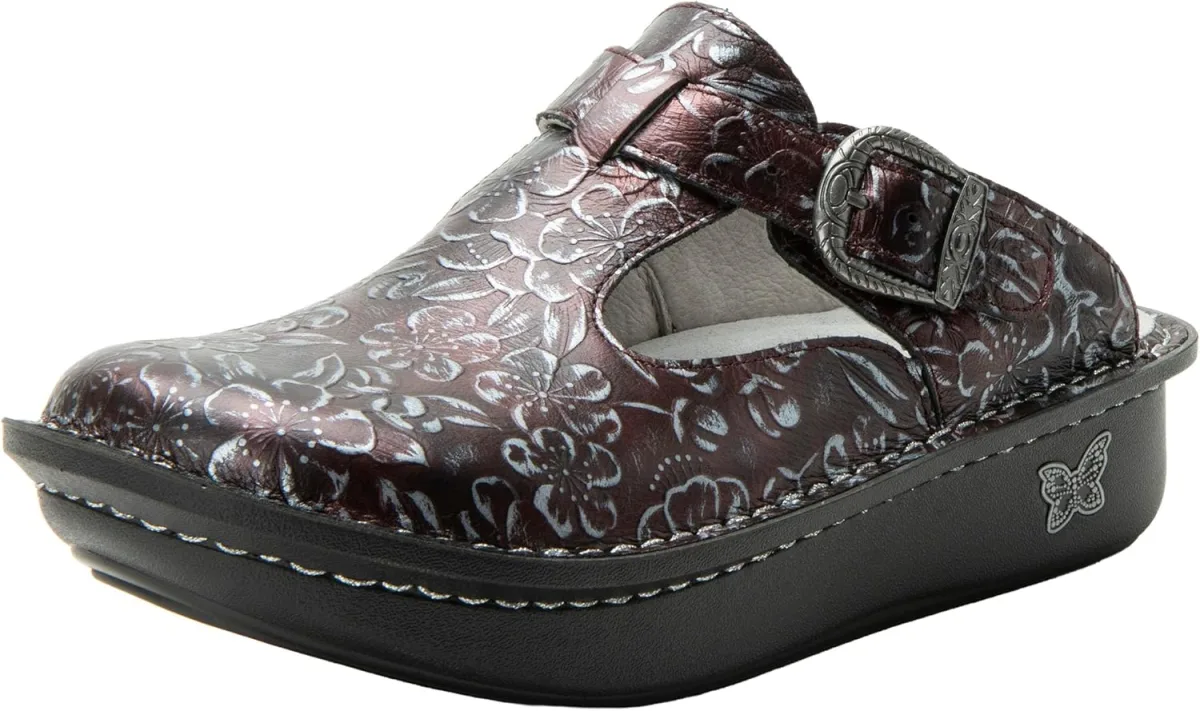
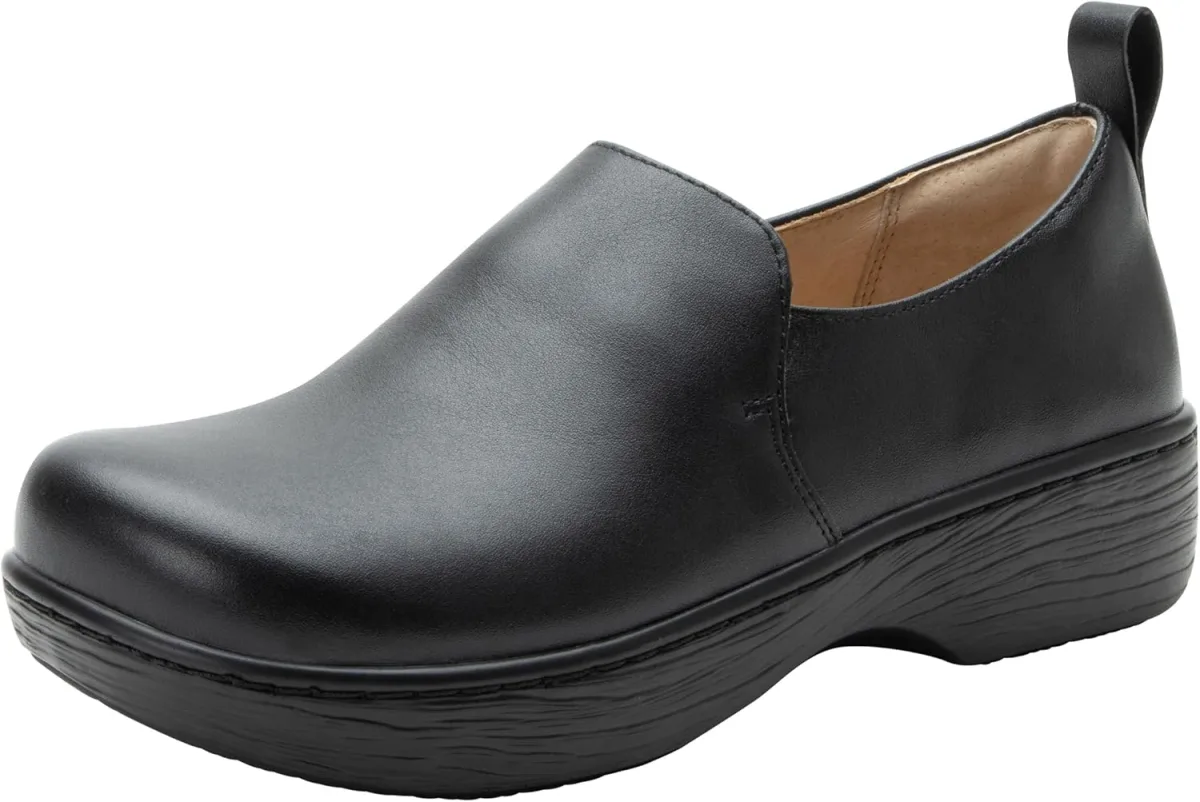
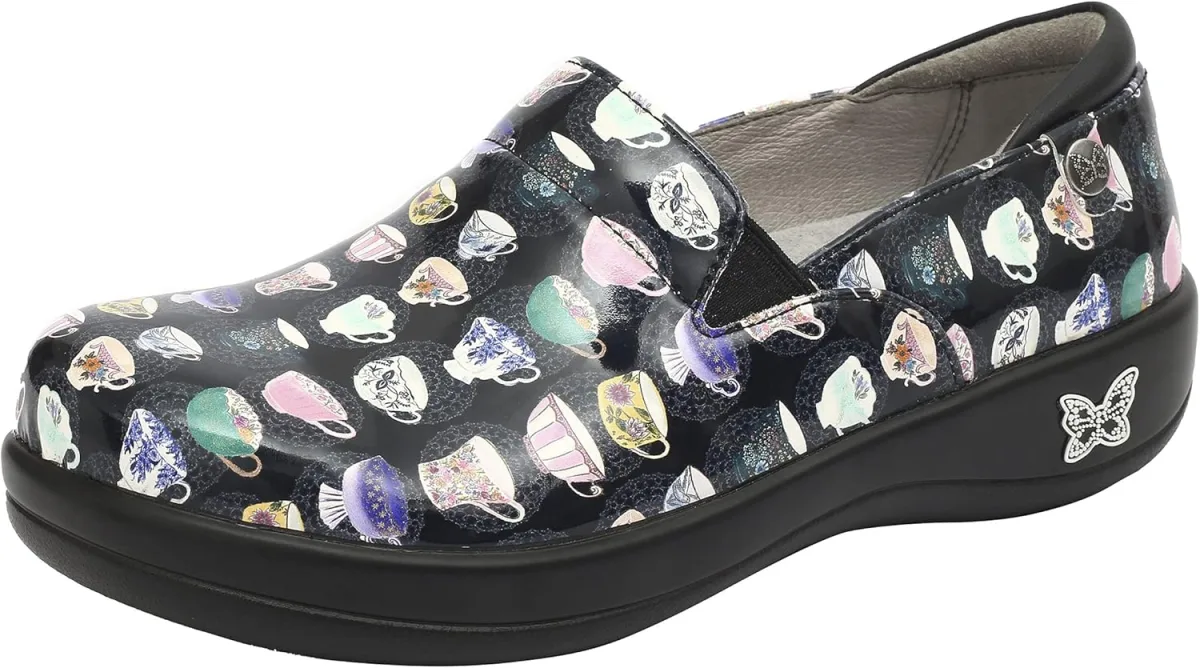
Alegria
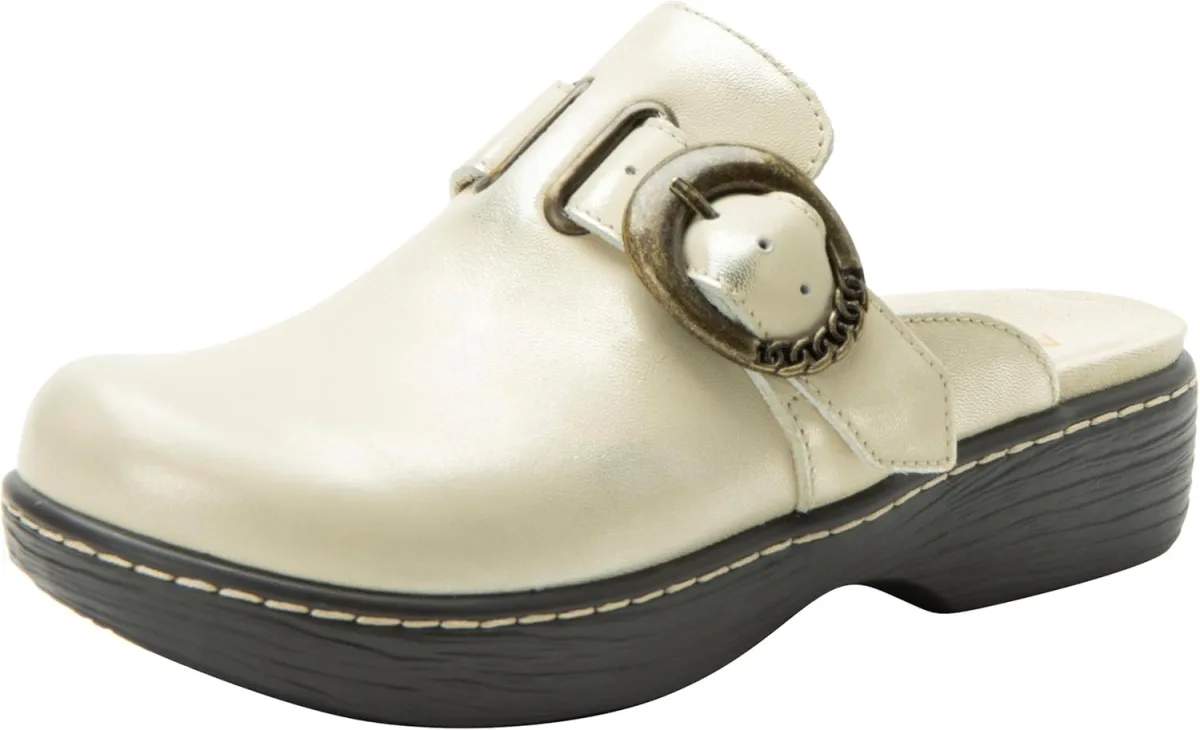
Alegria
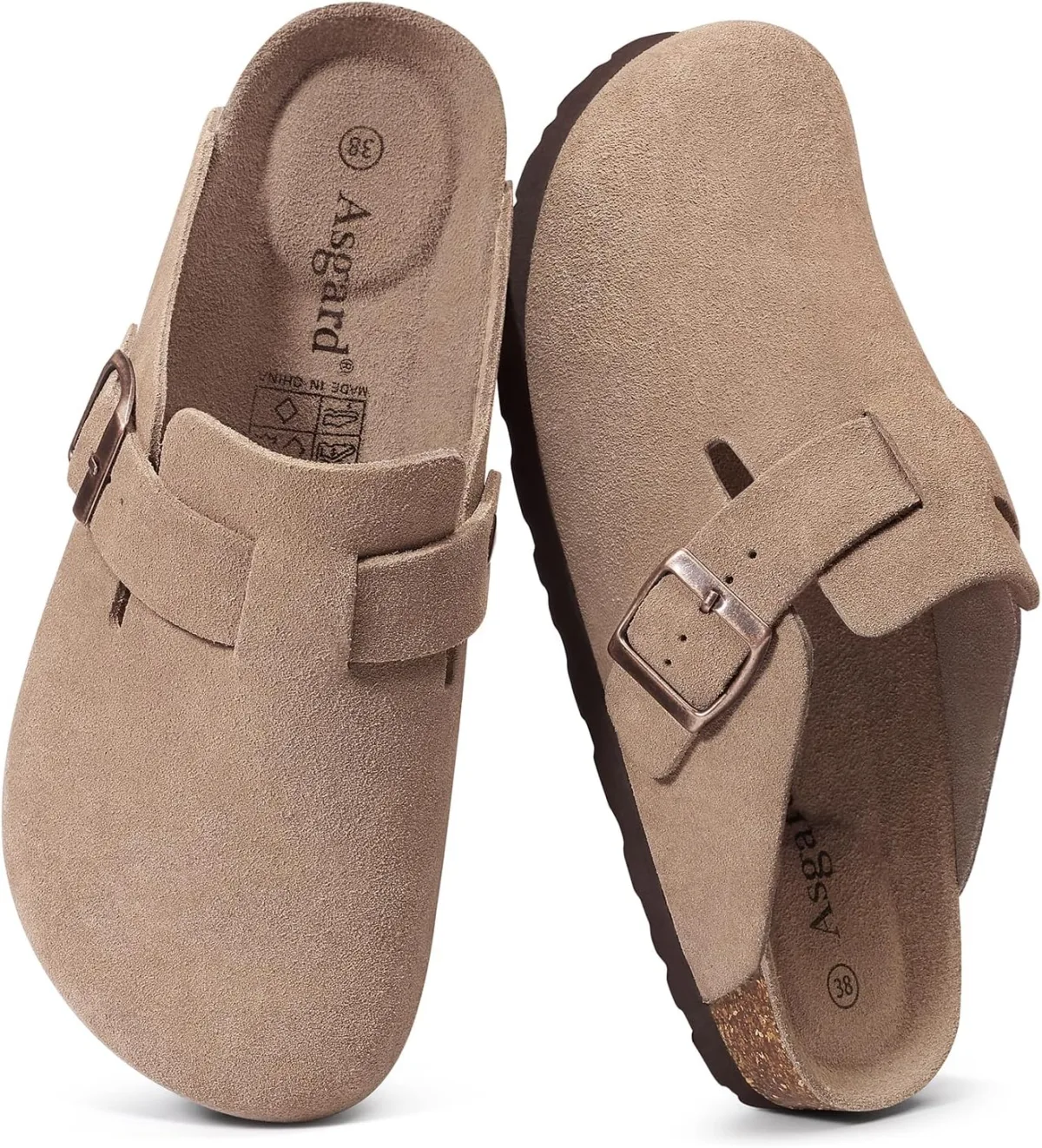
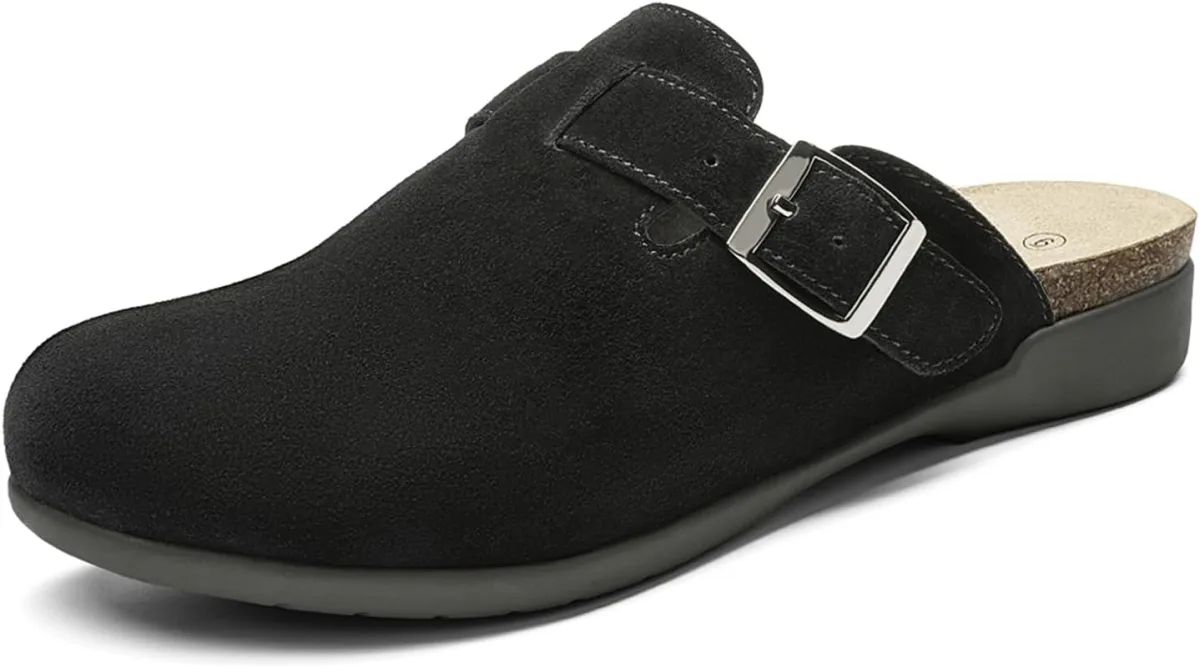
Athlefit
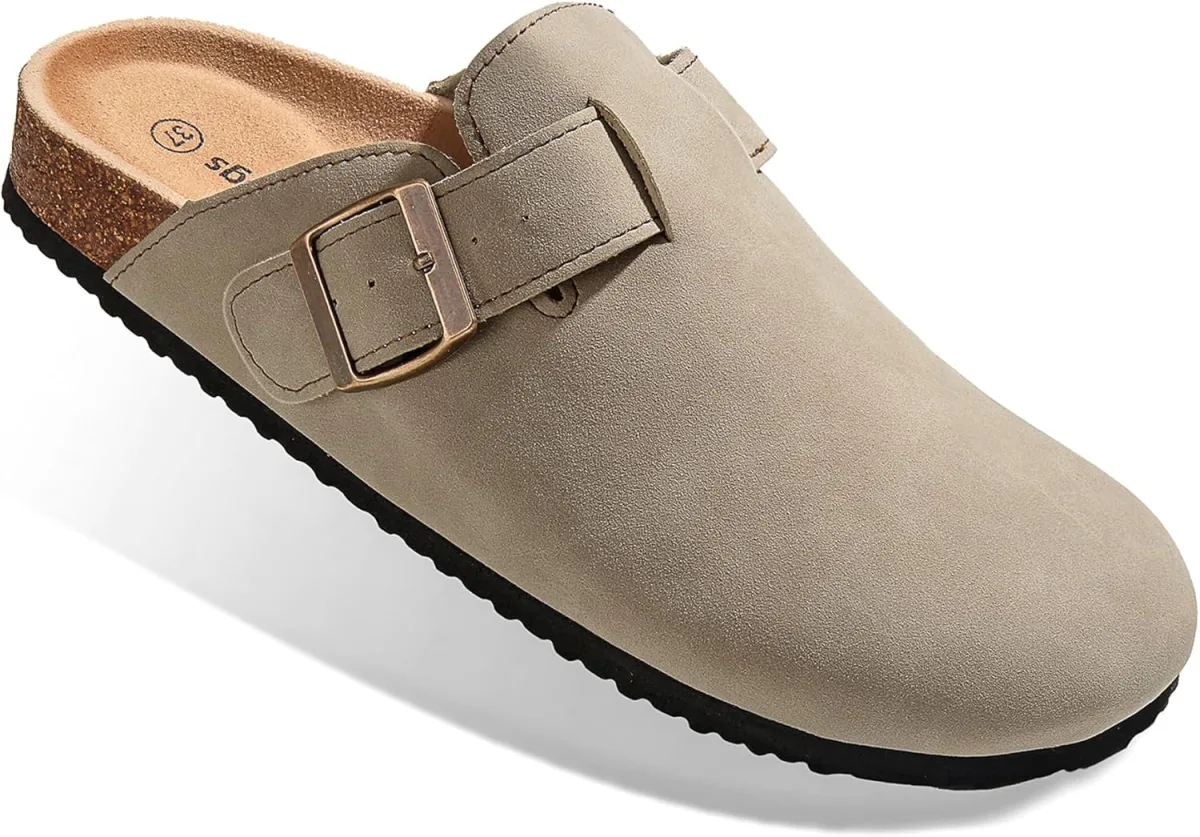
BULLIANT